

[BANGALORE BALCONIES: OUTDOOR LIVING SPACES FOR A GARDEN CITY]
BANGALORE’S CLIMATE ADVANTAGE: WHY BALCONIES MATTER HERE
Bangalore’s climate is genuinely exceptional among Indian cities. Moderate temperatures year-round. Adequate rainfall but not the crushing monsoons of coastal cities. Pleasant breezes. A garden city that celebrates outdoor living.
This climate creates an extraordinary opportunity for balcony design that most Indian cities don’t have. In Delhi, summer heat makes balconies unusable for months. In Mumbai, the monsoon is so intense that balconies become difficult to use. In Bangalore, the climate allows balconies to be genuinely useful outdoor living spaces for most of the year.
Yet most Bangalore balconies remain underutilized. A place to hang laundry. Storage for items you don’t know where else to put. A space you pass through but don’t actually use or enjoy. This represents a lost opportunity.
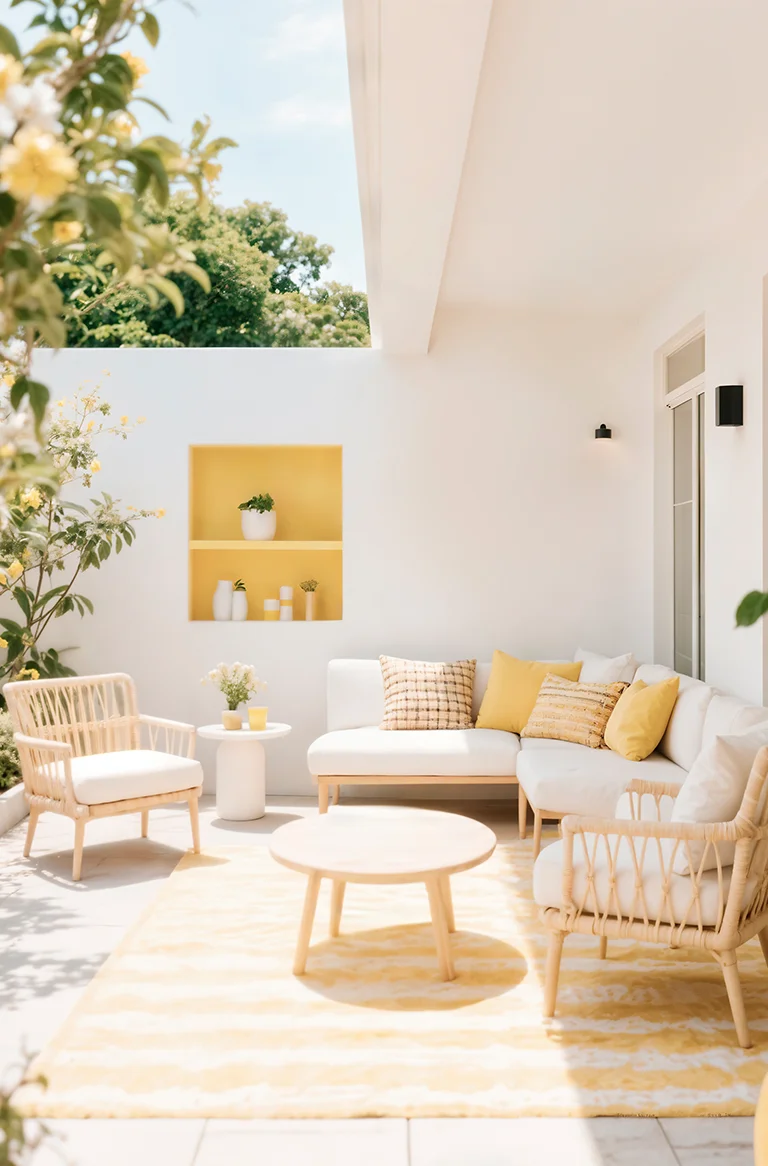
A well-designed Bangalore balcony becomes an extension of your interior living space. A place to sit with morning coffee. A space for reading and reflection. An outdoor dining area. A place for plants and flowers. A sanctuary from the intensity of indoor living. A connection to the garden city that Bangalore is.
The difference between a poorly designed and a well-designed balcony is the difference between a neglected space and a genuinely used outdoor room. Between a utilitarian necessity and an integral part of your home life.
BANGALORE’S MONSOON: MATERIAL REALITY AND DESIGN RESPONSE
While Bangalore’s monsoon is less intense than coastal cities, it is still substantial. The southwest monsoon arrives in June, peaks in August and September, and extends through October. Heavy rainfall. Humidity. Wind-driven moisture. Conditions that challenge balcony materials and finishes.
Many Bangalore balconies suffer from monsoon damage. Concrete surfaces become slippery and deteriorate. Wood finishes fail and the wood rots underneath. Metal corrodes and rusts. Fabric awnings tear and degrade. Painted surfaces peel. The result is a deteriorating, neglected appearance that gets worse each monsoon season.
This deterioration is not inevitable. It results from material choices and design approaches that don’t account for monsoon reality.
Concrete surfaces need slope and drainage. Balcony flooring that holds standing water during the monsoon creates problems. Slippery surfaces. Standing water that encourages mold and mildew. Concrete that stays wet begins deteriorating. Proper slope ensures water drains rather than pooling. Adequate drainage systems remove water efficiently.
Sealing and waterproofing are essential. Exposed concrete should be sealed with waterproofing treatments appropriate for monsoon conditions. Quality waterproofing prevents water penetration that causes deterioration and damage to structural elements and interiors below the balcony. Waterproofing should be maintained and reapplied as needed.
Wood needs appropriate finishing. If the balcony includes wood elements—decking, railings, or structural elements—the wood must be finished appropriately for monsoon conditions. Quality exterior wood stains or sealers that allow the wood to breathe while protecting from moisture. Oil-based finishes that penetrate the wood rather than sitting on the surface. Finishes that need regular maintenance rather than synthetic finishes that can trap moisture underneath.
Teak and other naturally durable woods are appropriate for balconies. These woods weather the monsoon better than softer woods. Over time, teak develops a silver-grey patina as the surface oxidizes. This weathered appearance is part of teak’s character and beauty. Teak balcony decking ages gracefully through monsoon seasons.
Metal railings and fixtures need corrosion resistance. If balconies include metal railings, fixtures, or other elements, the metal should be chosen for corrosion resistance. Stainless steel resists rust but can still corrode in coastal-influenced monsoon conditions. Powder-coated steel needs regular inspection and touch-ups. Aluminum is lightweight and resists corrosion but can oxidize, requiring periodic maintenance. Hot-dip galvanized steel provides excellent rust resistance but has a utilitarian appearance.
For Bangalore balconies, stainless steel or powder-coated steel with good quality finishes typically perform well if maintained. Avoid unpainted mild steel that will rust quickly.
Fabric and soft furnishings need durability. If balconies include fabric elements—awnings, cushions, outdoor furniture with fabric—these materials must be appropriate for monsoon exposure. Solution-dyed acrylic fabrics resist fading and moisture. Marine-grade fabrics withstand weather exposure. Canvas and linen, while beautiful, deteriorate quickly without regular maintenance and storage during intense monsoon periods.
Sunbrella and similar high-performance outdoor fabrics are appropriate for Bangalore balconies. These fabrics resist moisture, fading, and mildew. They can be left exposed through the monsoon without deterioration.
Drainage systems are critical infrastructure. Balconies need adequate drainage so water doesn’t accumulate. This might include slope in the flooring, drainage channels, or downspouts that direct water away from the structure. Blocked or inadequate drainage creates standing water that causes problems. Drainage systems should be designed into the balcony architecture, not added as an afterthought.
Roof or overhead protection extends usability. If the balcony has overhead coverage—a roof, pergola, or retractable awning—this extends the space’s usability during monsoon. Protection from direct rain allows the space to be used even during heavy rainfall. Overhead coverage also reduces water exposure on railings, furniture, and other elements.
Maintenance schedule prevents deterioration. Even well-designed balconies deteriorate if not maintained. Regular inspection for standing water or drainage problems. Cleaning debris that blocks drainage. Reapplying sealers and finishes as they deteriorate. Checking railings and fixtures for corrosion. A consistent maintenance schedule prevents small problems from becoming major deterioration.
MATERIAL SELECTION FOR MONSOON PERFORMANCE
Porcelain tile and stone floor Bangalore balconies well.
Wood decking must be naturally durable.
Exposed concrete needs protection.
Metal railings and fixtures.
Composite materials offer low-maintenance alternatives.
Awnings and shade structures
BANGALORE’S CLIMATE: DESIGNING FOR SEASONAL CHANGES
Bangalore’s climate changes subtly through the year, creating opportunities for seasonal balcony design.
Dry season (January to May): High visibility and comfort.
From January through May, Bangalore’s weather is ideal. Clear skies. Moderate temperatures. Low humidity. Gentle breezes. This is the peak season for balcony use. The space feels pleasant from morning through evening. This is when balconies should look their best and function beautifully.
Design considerations for dry season include maximizing views and openness. Minimal shade needed. Open railings that frame Bangalore’s garden city character. Plants and flowers thrive in this season. The balcony can feel light, open, and connected to the city outside.
Monsoon (June to October): Weather resistance and protection.
The monsoon brings necessary rain but also challenges. Heavy rainfall, especially in August and September. Wind-driven moisture. Humidity that lingers even between rain events. Balconies need to shift from open outdoor rooms to protected spaces that can still be used but with acknowledgment of weather conditions.
Design considerations for monsoon include overhead protection for continued usability. Adequate drainage to prevent standing water. Materials that resist moisture and don’t deteriorate in damp conditions. The space might feel more enclosed during monsoon, with less emphasis on openness and more on weather resistance.
Post-monsoon transition (October-November): Renewal and clarity.
As the monsoon ends and humidity begins dropping, there’s a transition period where the weather clears and the air feels fresh and clean. This is when the balcony often shows the effects of monsoon—algae growth on concrete, mold on fabric, rust on metal. Post-monsoon maintenance and cleaning refreshes the space as the dry season returns.
Summer transition (February-May): Peak season and heat.
The peak dry season is ideal, but as summer approaches (February onwards), afternoon sun becomes intense. Shade becomes increasingly important. Afternoon temperatures can rise uncomfortably even in Bangalore. Balcony design should accommodate shade without completely blocking the space.
Retractable shade structures allow flexibility. Summer shade when needed, open views in cooler months. Climbing plants on trellises that provide summer shade without blocking winter sun. Fixed pergolas that filter afternoon sun while allowing air circulation.
Understanding these seasonal shifts allows balcony design that performs well year-round rather than being ideal in one season and inadequate in others.
BALCONY TYPES IN BANGALORE: DESIGN APPROACHES FOR DIFFERENT CONDITIONS
Large balconies: Creating outdoor rooms.
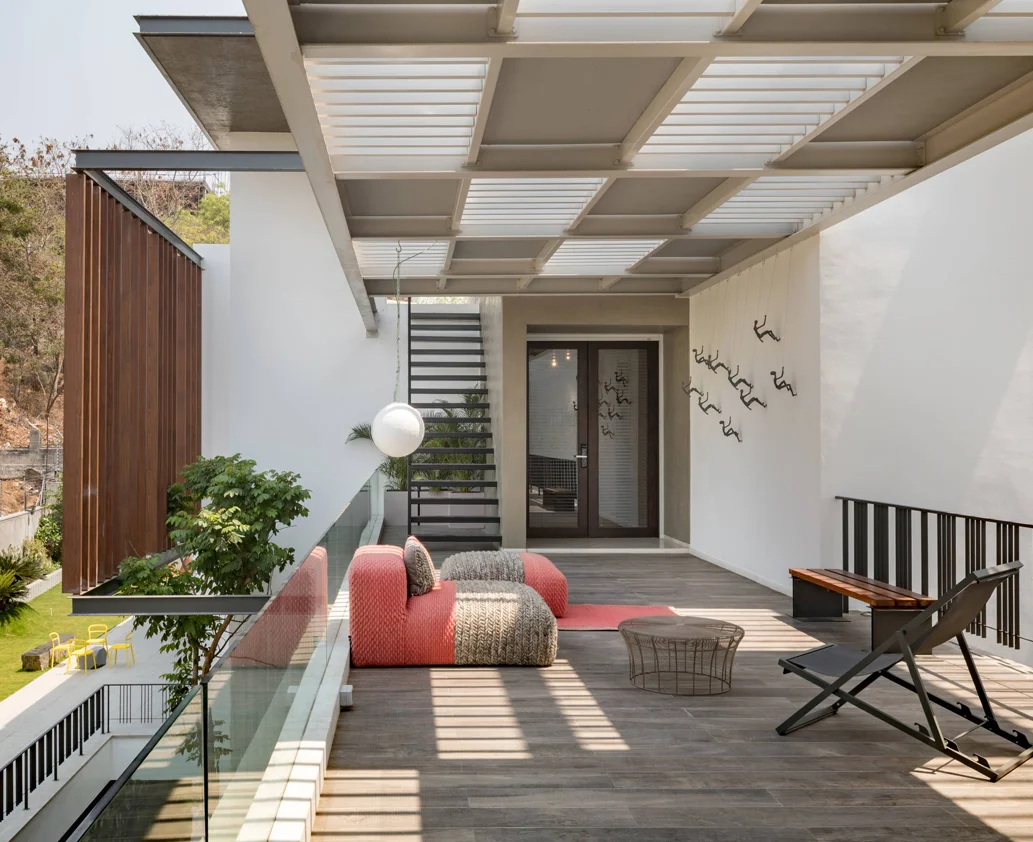
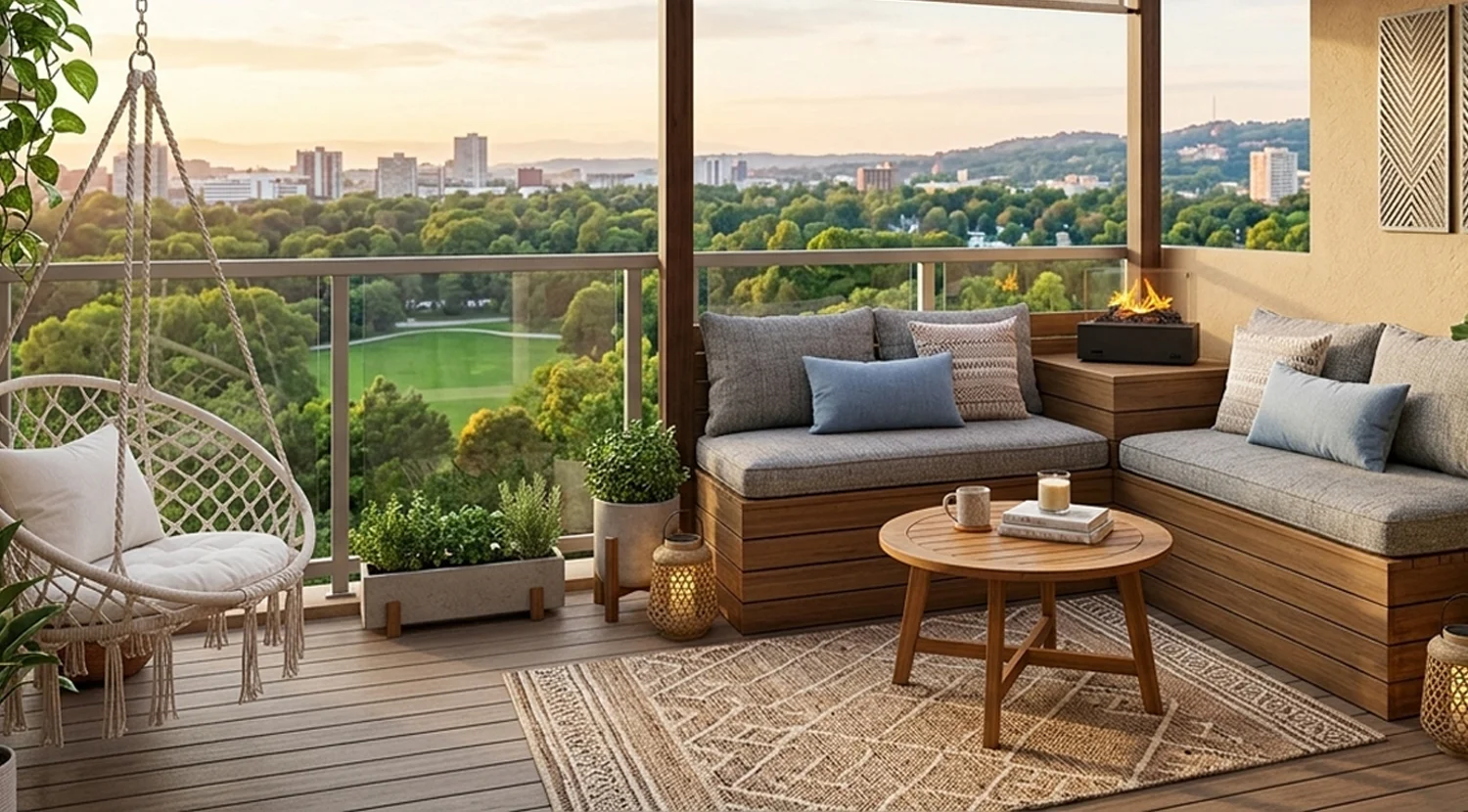
Large balconies can accommodate multiple functional zones: a seating area with comfortable furniture, a dining area with table and chairs, a plant and garden area. The space functions as a genuine extension of interior living rather than a simple utility space.
Large balconies benefit from careful zone definition. Different flooring materials, raised planters, or pergolas can define different functional areas. This organization makes the large space feel purposeful rather than empty.
Large balconies should accommodate shade for comfort during warmer months and intense sun. Pergolas, retractable awnings, or climbing vines provide shade without making the space feel enclosed.
Modest balconies: Efficient zone design.
A modest balcony might accommodate a small seating area and a planter zone, but not both extensively. Design should prioritize what's most important for your life. If you primarily want to sit outside with tea, prioritize a seating area. If you want plants, prioritize garden space. If equally important, divide the space carefully between the two functions.
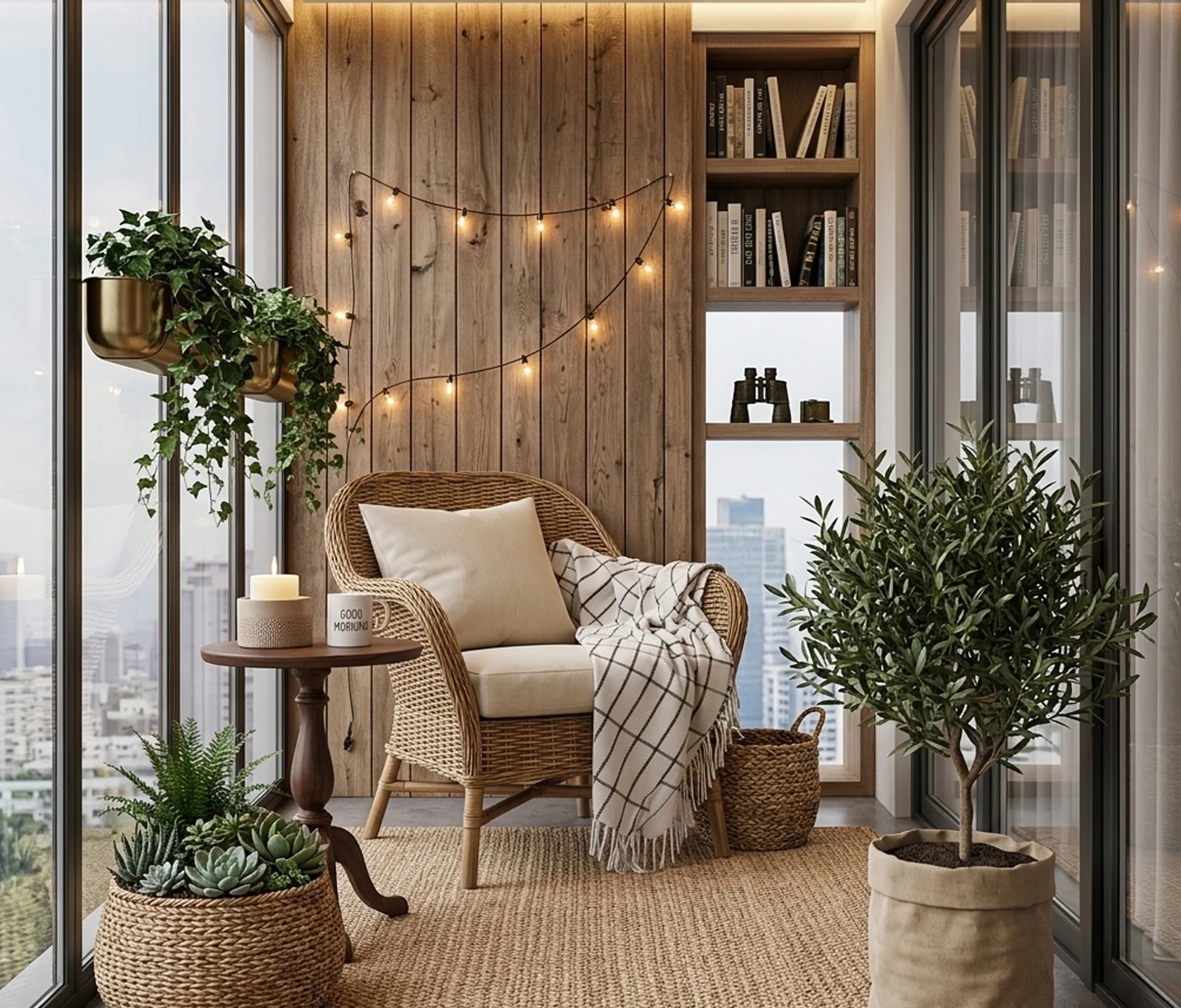
Multifunctional furniture helps. A bench that provides seating but also storage underneath. Planters that define space while providing greenery. Shelving that accommodates both plant display and storage.
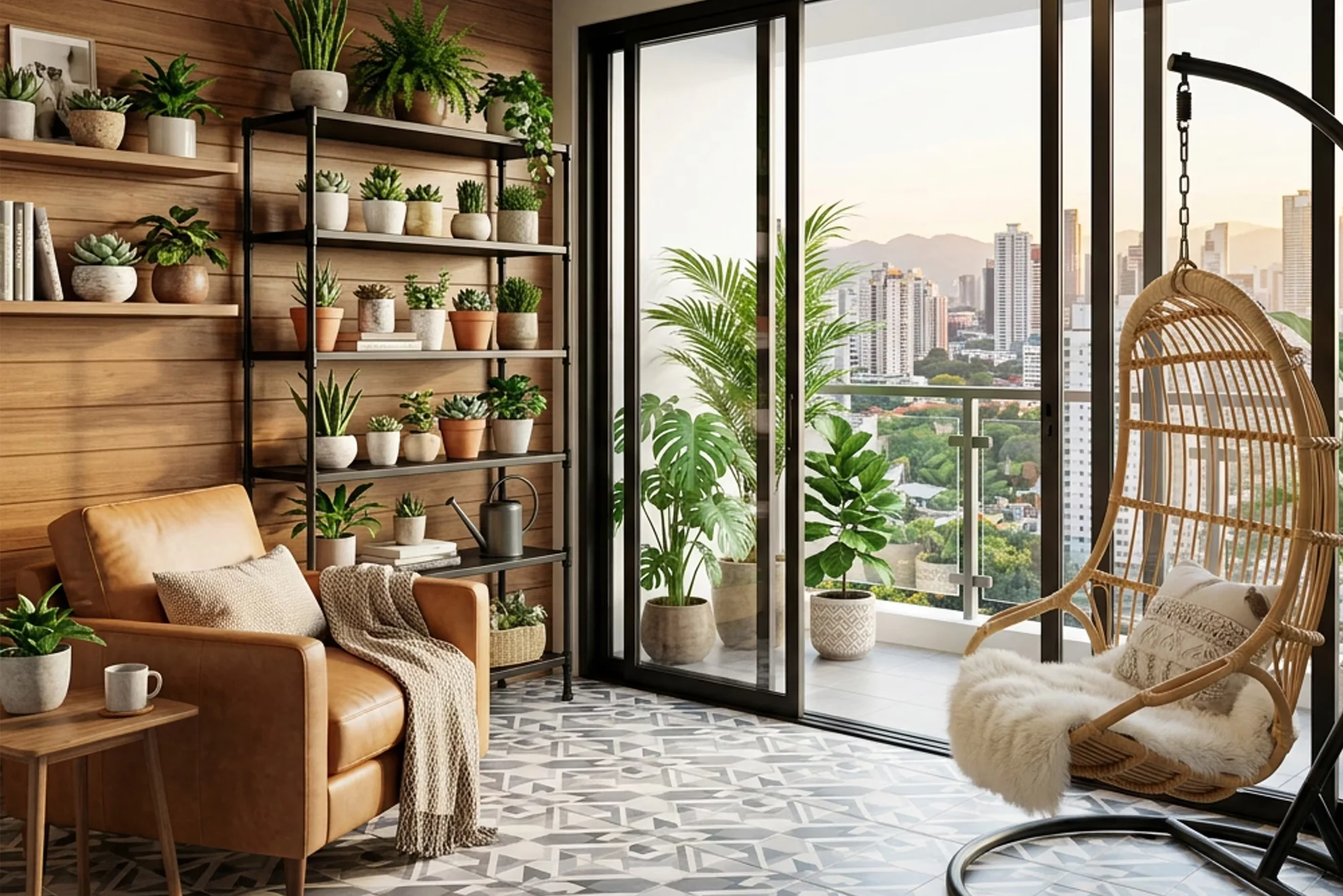
Modest balconies benefit from vertical gardening. Wall-mounted planters and trellises maximize planting space without taking up floor area. Vertical elements also create visual interest and soften hard surfaces.
Corner balconies: Maximizing advantages.
Corner balconies should be designed to take advantage of these qualities. Open railings that frame corner views. Seating positioned to enjoy the corner location. Minimal visual obstruction that blocks the views that make the corner location valuable.
Narrow balconies: Linear efficiency.
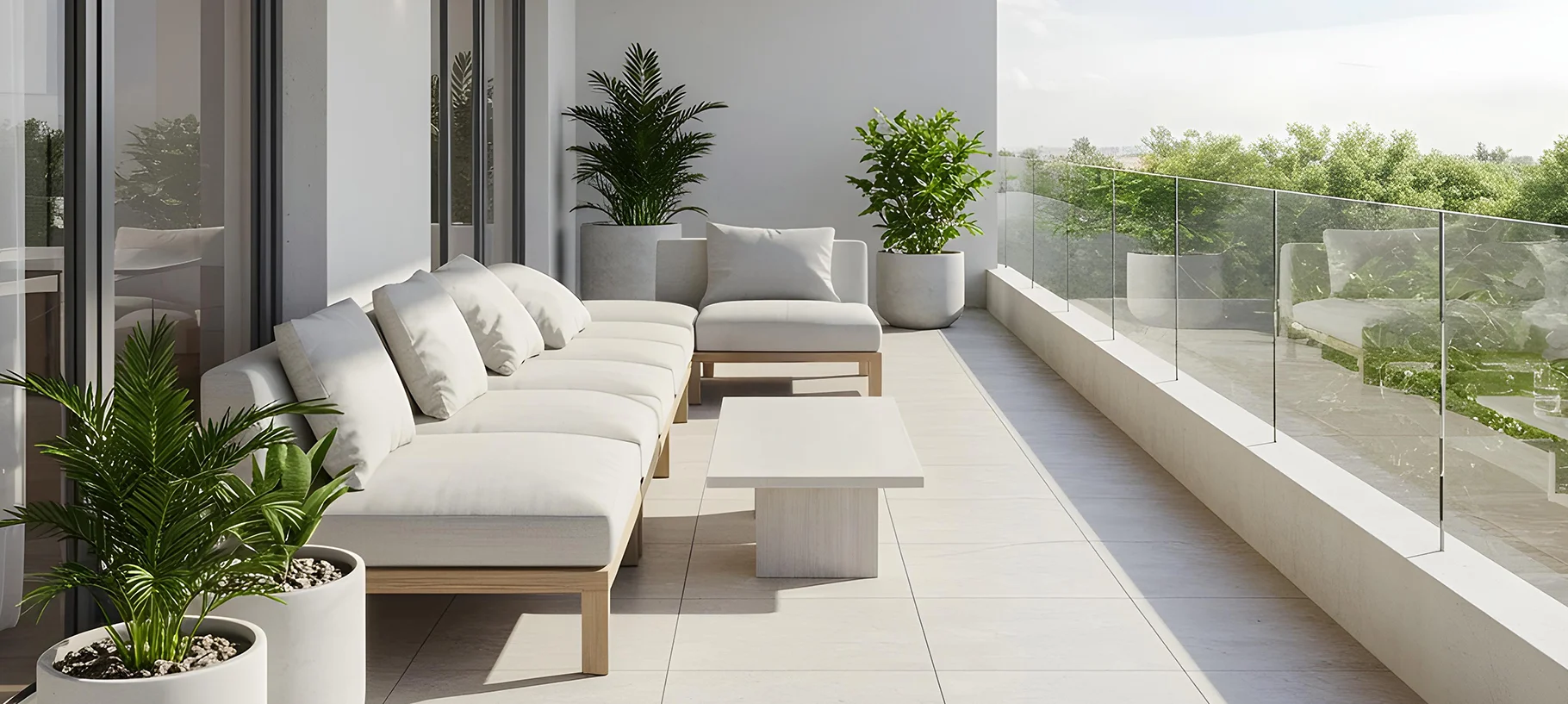
Linear balconies work well as walkways with intermittent sitting areas. A long bench that accommodates multiple people. Planter beds along the length. Shelving along the wall that provides display and storage. The linearity can be embraced rather than fought against.
Balconies with structural columns: Working with obstructions.
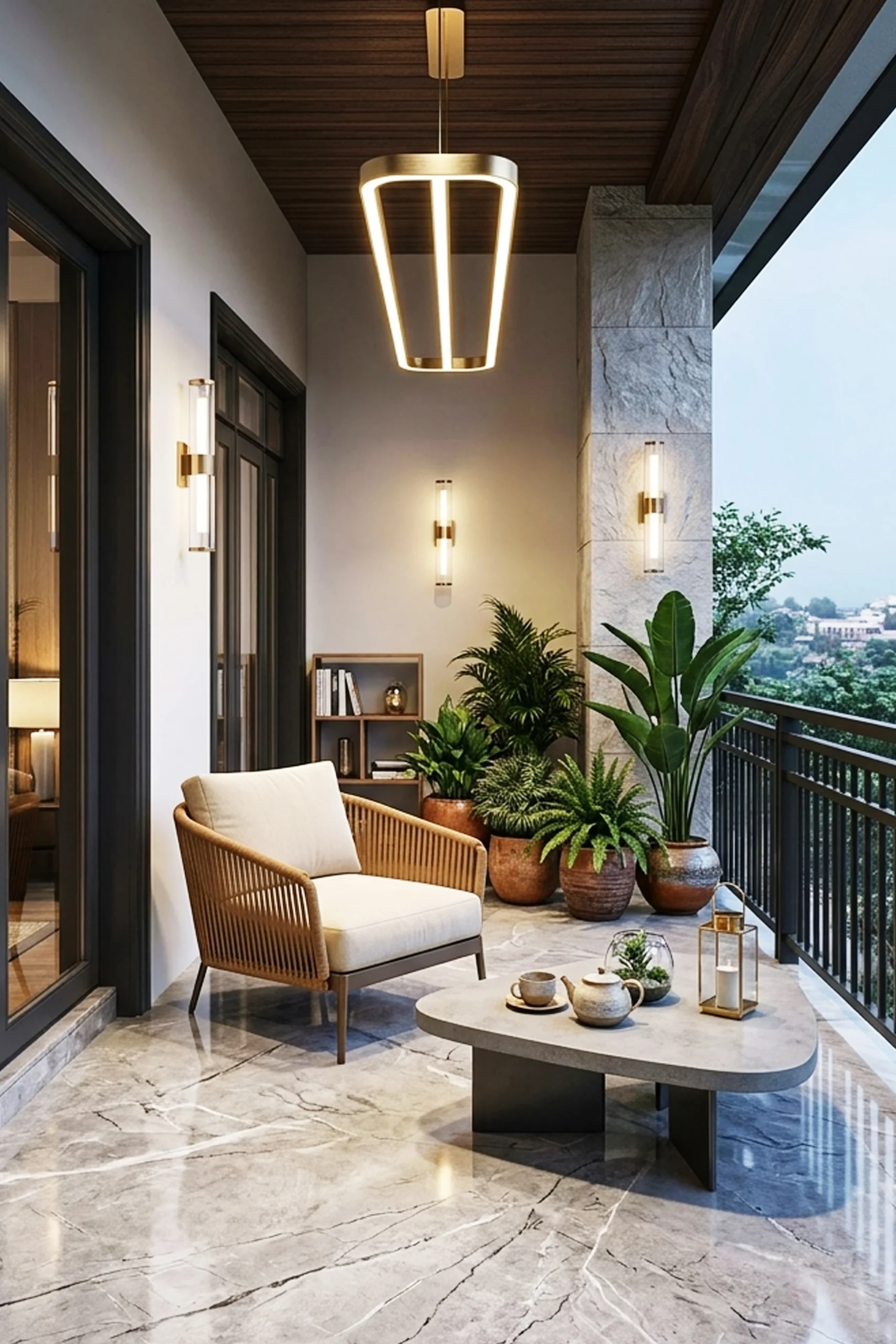
Columns can be incorporated into the design. They might become planters around their base. They might define spatial zones. They might be painted a contrasting color that makes them a design feature rather than an obstruction. Working with the column rather than against it creates better design than trying to camouflage it.
Insyde Studio
How the balcony integrates with the interior spaces it adjoins affects both aesthetics and function.
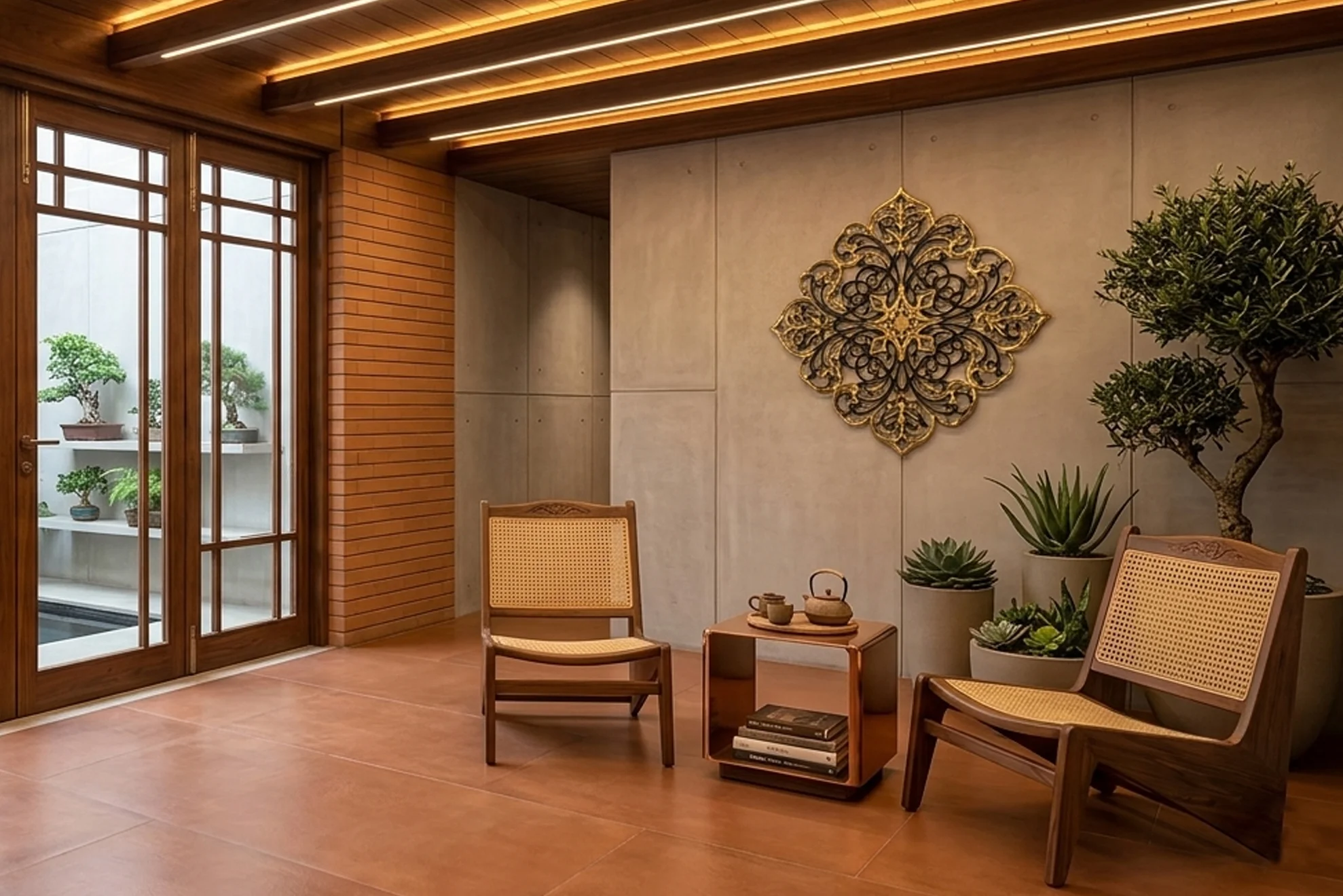
Material continuity creates visual flow. If the interior flooring material extends onto the balcony, this creates visual continuity that makes the balcony feel like part of the interior rather than a separate exterior space. Wood flooring that transitions from interior to balcony. Tile flooring that continues outdoors. This material continuity makes the transition seamless.
When material changes from interior to balcony, the change becomes a visual boundary. This can be effective for clearly marking the transition to outdoor space, but it can also feel disconnected. Material continuity creates a more unified feeling.
Color and finish coordination. The balcony finishes should coordinate with interior finishes. If interiors feature warm wood tones, balcony materials and finishes should complement this. If interiors are contemporary with cool tones, balcony design should speak a similar aesthetic language. Coordination creates a sense that the balcony is designed as part of the home rather than in isolation.
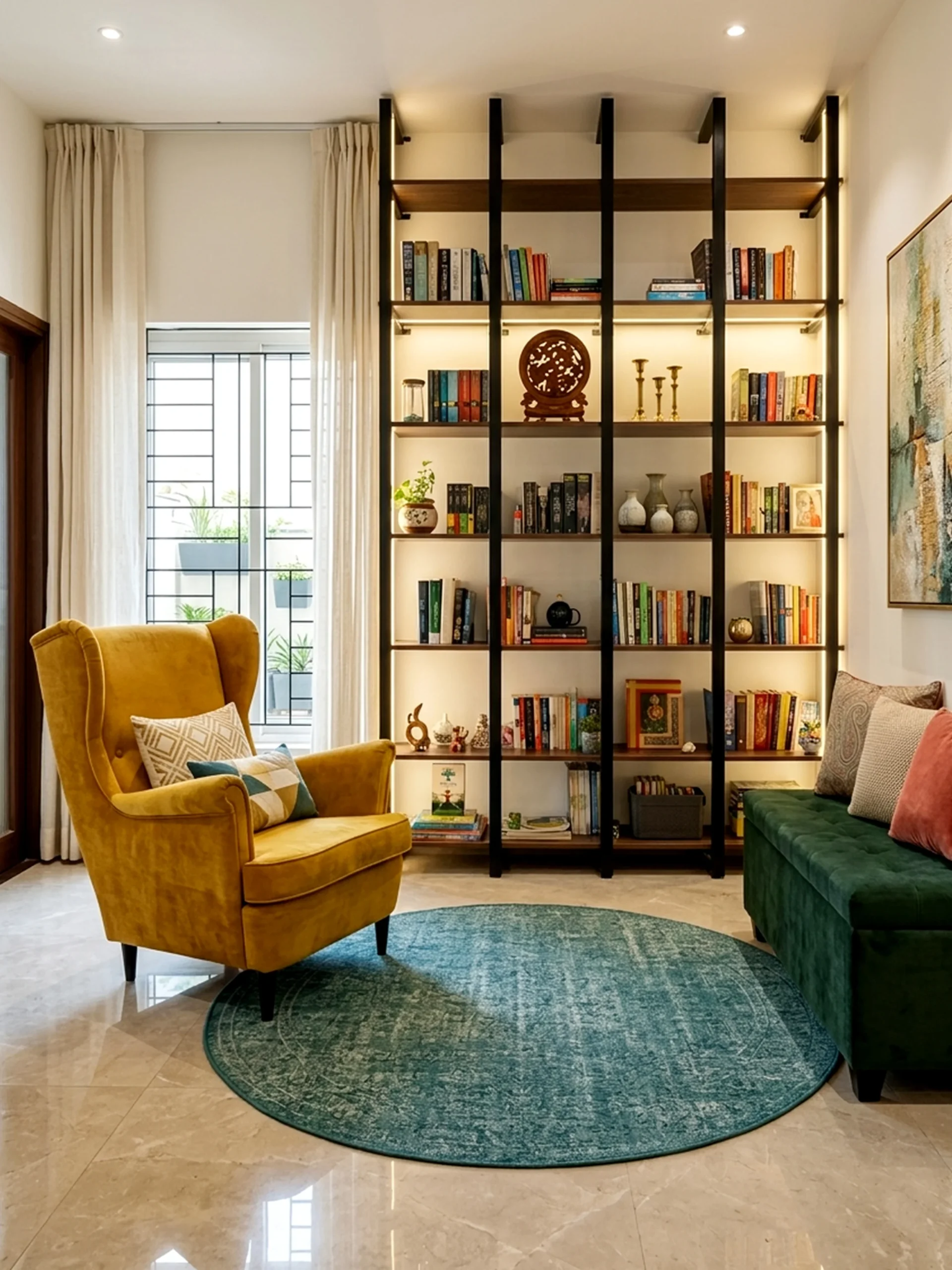
Sightline from interior creates connection. The view from the interior toward the balcony affects perception of the space. An interior seating area positioned to look toward the balcony creates a sense of extension. The balcony becomes visible as part of the living space rather than a separate area you leave to access. This visual connection makes the balcony feel more integrated.
Threshold design marks transition. The transition from interior to balcony should be thoughtfully designed. A simple change in level or material marks the boundary. French doors or sliding glass that clearly frame the transition. The threshold should feel intentional rather than abrupt. Good threshold design makes moving between interior and balcony feel natural and seamless.
Weather integration. The relationship between balcony and interior affects weather experience. If the interior seating area faces glass doors opening to the balcony, the view of rain on the balcony becomes part of the interior experience. Storm sounds are audible but moderated by glass. The weather becomes an aesthetic experience rather than a distraction. This can be beautiful during monsoon—watching rain from inside while being protected.
Shared furniture aesthetic. Outdoor furniture should coordinate aesthetically with interior furniture. If interiors feature contemporary furnishings, outdoor furniture should speak a similar language. If interiors are traditional, outdoor pieces should complement this. Coordinated aesthetics make the indoor-outdoor space feel unified rather than mixing conflicting styles.
Lighting creates unity. Interior and balcony lighting should be coordinated. Similar color temperature creates visual continuity. Lighting that extends from interior into balcony space creates a unified lit environment rather than a bright interior and dark exterior. Thoughtful lighting design makes the transition from inside to outside feel fluid.
SEATING AND FURNITURE FOR BANGALORE BALCONIES
Outdoor furniture choice significantly affects whether balconies are actually used.
Comfort is essential. Uncomfortable furniture creates unused balconies. A small hard bench might be all that fits, but if it’s uncomfortable to sit on, you’ll rarely use it. Choosing furniture comfortable enough to sit on for extended periods encourages actual use. Cushioned chairs. Generous seating dimensions. Back support. Comfort creates usage.
Weather-appropriate materials. Outdoor furniture must tolerate Bangalore’s monsoons. Teak or other naturally durable wood withstands weather and ages beautifully. Powder-coated metal resists rust if well-maintained. Wicker or rattan should be treated for weather resistance or stored during monsoon. Cushions should be removable and washable or made from weather-resistant fabric.
Avoid furniture that deteriorates through monsoon. Untreated softwood. Raw metal without coating. Fabric not rated for outdoor use. These will deteriorate and require replacement.
Flexibility and multifunctionality. Furniture that serves multiple functions maximizes limited balcony space. A bench with storage underneath. A table that expands for dining. Moveable pieces that can be repositioned. Flexibility allows the balcony to accommodate different activities.
Scale appropriate to space. Furniture should be scaled to the balcony size. Oversized furniture makes a small balcony feel cramped and unusable. Undersized furniture makes a large balcony feel empty. Getting the scale right makes the space feel proportionate and comfortable.
For modest balconies, individual chairs or a small loveseat works better than a full sectional. For large balconies, multiple seating areas with different furniture types create defined zones.
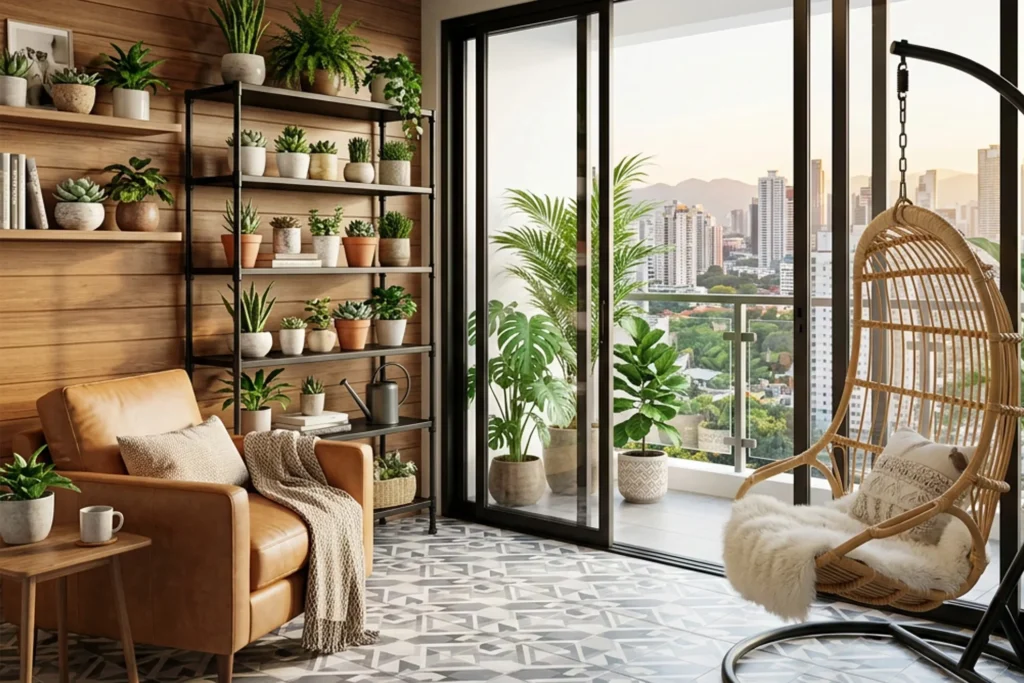
Plants and greenery integrate with furniture. Rather than keeping seating and planting separate, integrating plants with furniture areas creates a more cohesive design. Planters around seating areas. Climbing vines on trellises behind or above seating. Shelving with plant display above a bench. This integration makes the space feel like a garden rather than a utilitarian balcony with furniture placed on it.
Tables and functional pieces. Beyond seating, a small table serves multiple purposes. A place to set drinks or books. A surface for dining. A display surface for plants or objects. Even a modest balcony benefits from a small table that creates functionality.
PLANTING AND GARDENING ON BANGALORE BALCONIES
Bangalore’s reputation as a garden city makes balcony gardening appealing and practical.
Plants thrive in Bangalore's climate.
Balcony garden zones maximize planting.
Monsoon-appropriate plantings.
Drainage for potted plants.
Vertical gardening maximizes space.
SHADE AND OVERHEAD PROTECTION
Shade design affects balcony usability and comfort throughout the year.
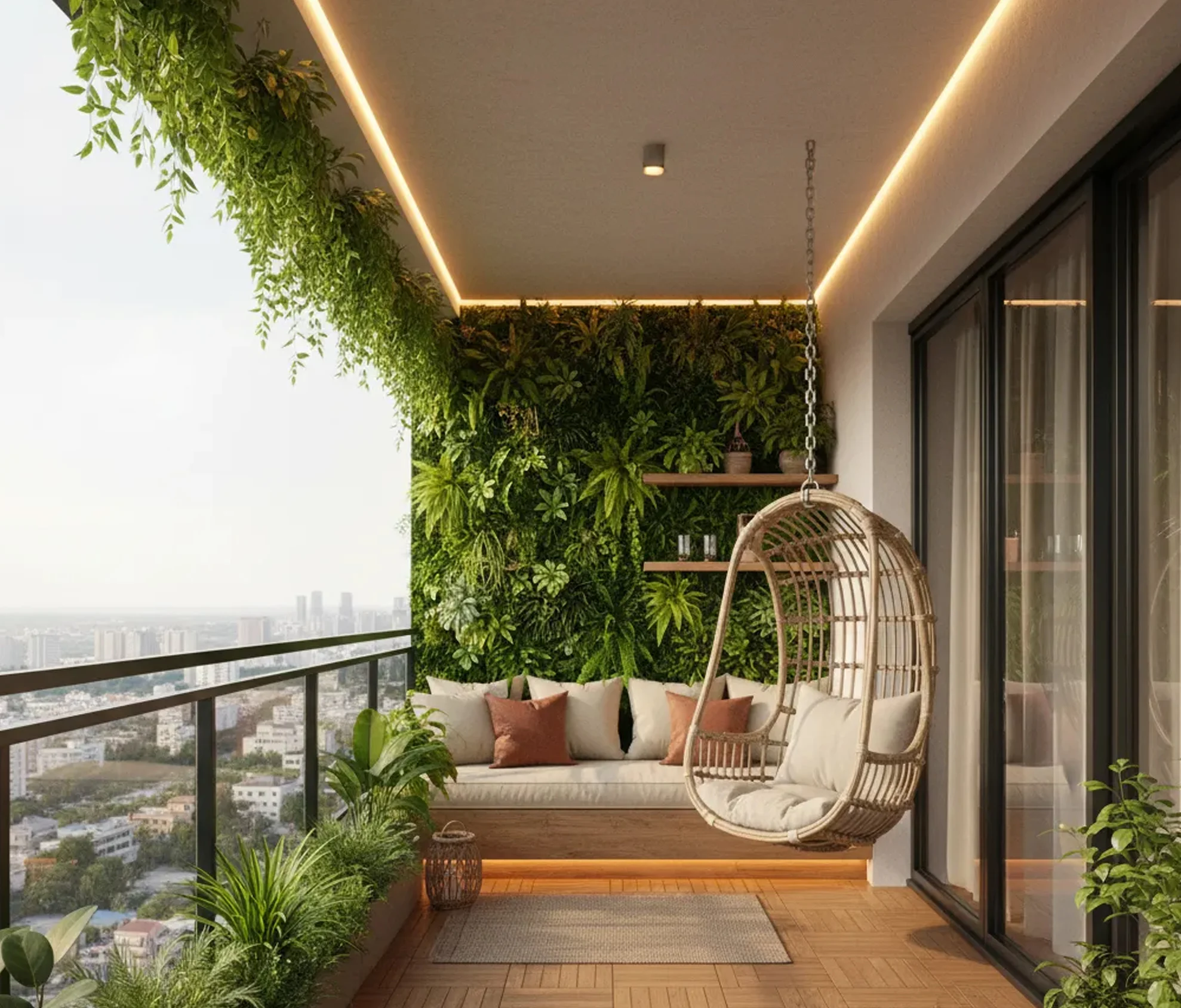
Pergolas: Filtered light and elegance.
Pergolas work well for large balconies where space permits the structure. On modest balconies, pergolas can feel overwhelming. Trellis panels or climbing vines on simple structures can provide similar benefits at smaller scale.
Retractable awnings: Flexible shade.
Retractable awnings work particularly well for modest balconies where fixed structures would feel overwhelming. Flexibility makes them appropriate for various uses and seasons. Quality motorized systems operate reliably for many years.
Fixed awnings: Permanent protection.
Fixed awnings can make balconies feel enclosed or cave-like if too extensive. Partial fixed awnings that provide shade for seating areas without covering the entire space maintain a sense of openness.
Climbing vines and natural shade.
Natural shade takes time to establish and requires maintenance to keep vines trained and healthy. During initial years before vines fully establish, supplementary shade might be needed. Once established, living shade provides beautiful, evolving coverage.
Shade cloth: Simple and affordable.
Shade cloth is utilitarian and visible as such. It's less elegant than botanical shade or sophisticated structures, but it's practical and affordable. For those prioritizing function over aesthetics, shade cloth works well.
STORAGE AND ORGANIZATION
Effective storage transforms balconies from cluttered utility spaces to organized, beautiful areas.
Closed storage hides utilitarian items. While some plants and seating should be visible, utilitarian storage items—gardening tools, monsoon covers, seasonal furniture—should be hidden. Built-in cabinetry or storage benches hide these items while providing functional storage.
Well-designed storage furniture serves multiple purposes. A bench that provides seating while storing items underneath. A cabinet that displays plants on top while storing items inside. This multifunctionality maximizes value in limited space.
Open shelving displays plants and objects. Shelving that displays potted plants, books, or decorative objects creates visual interest while storing items. Open shelving works well for things you want to display. It should be organized and uncluttered, not a dumping ground for miscellaneous items.
Open shelving performs well when filled with attractive items—well-grown plants, attractive books, nice objects. Cluttered shelving looks messy and detracts from the space.
Vertical organization maximizes space. Wall-mounted shelving, pegboards, and hanging systems maximize storage without taking up floor area. Vertical organization is particularly effective on modest balconies where floor space is at a premium.
Vertical storage should be organized and accessible. Items frequently used should be at comfortable reach. Seasonal items can be stored higher or lower.
Seasonal storage rotation. Rather than trying to fit everything permanently on the balcony, rotating seasonal items extends storage capacity. Monsoon covers, summer shade structures, and seasonal furniture are stored off-season. This keeps the balcony feeling spacious and organized year-round rather than overloaded.
A dedicated storage area in the apartment—a cupboard or closet—holds off-season balcony items. This requires planning during apartment design but pays dividends in balcony functionality.
DESIGNING YOUR BANGALORE BALCONY
Whether you have a large villa balcony, a modest apartment balcony, or a tiny urban balcony, thoughtful design creates outdoor space that enhances your Bangalore home.
Book a consultation with our team. We’ll assess your balcony’s specific conditions, understand how you want to use it, explore seasonal performance, and design a space that becomes genuinely useful and genuinely beautiful.
Your balcony is an extension of your home. It deserves design that makes it a place you actually want to spend time. A place that works through monsoon and dry season. A place that feels like a natural extension of interior spaces rather than a neglected afterthought.
Let us help you create an outdoor room that takes full advantage of Bangalore’s exceptional climate and garden city character.