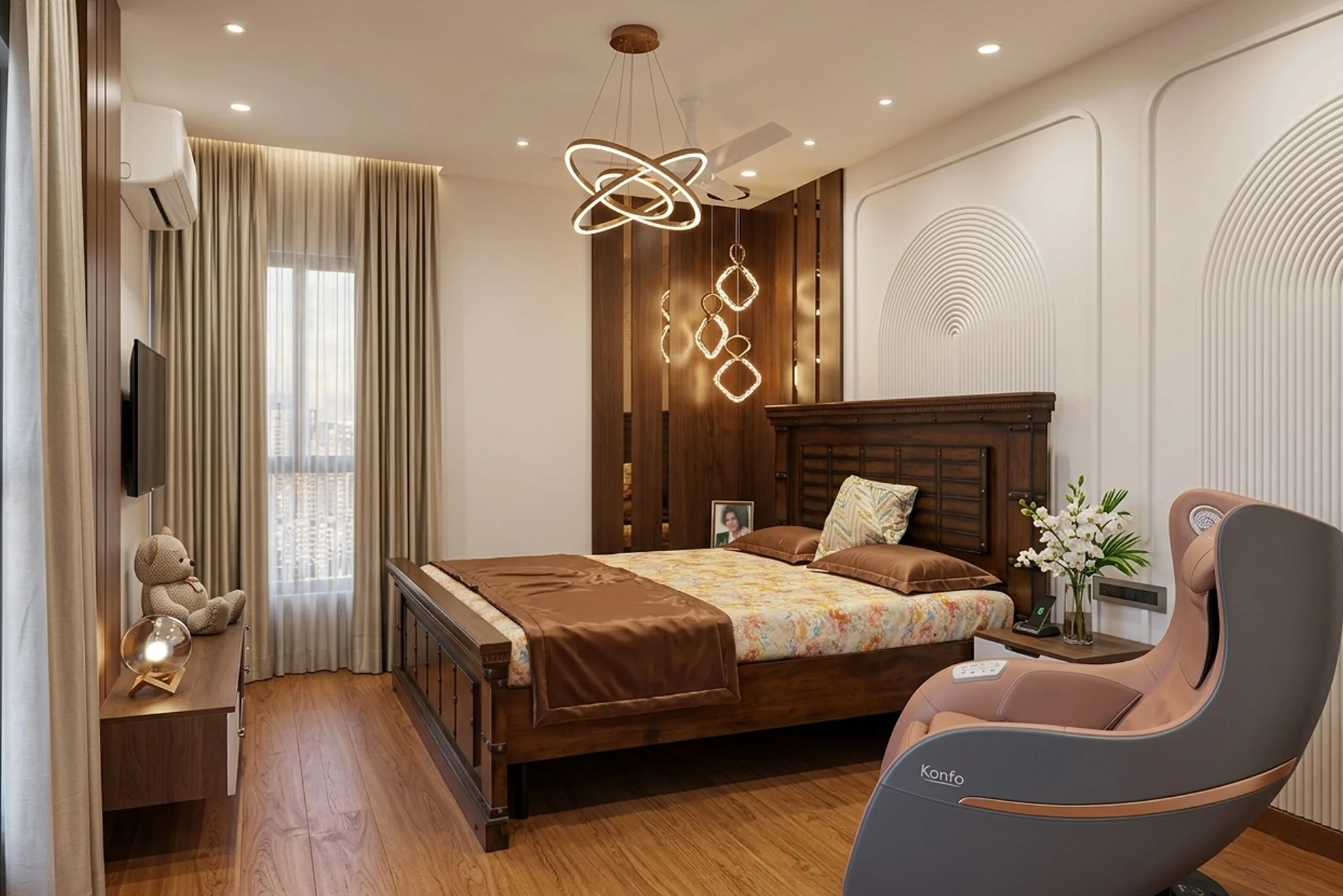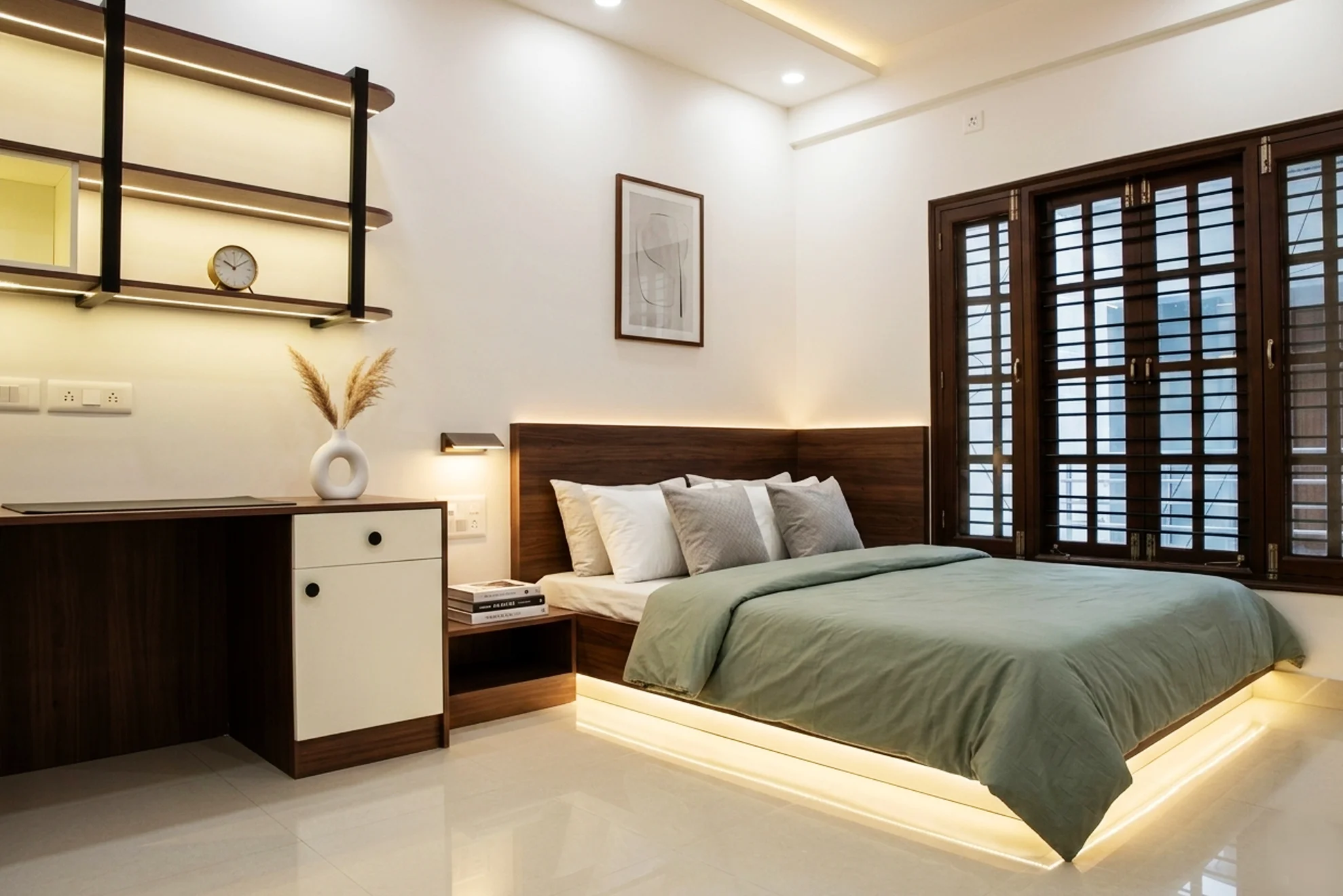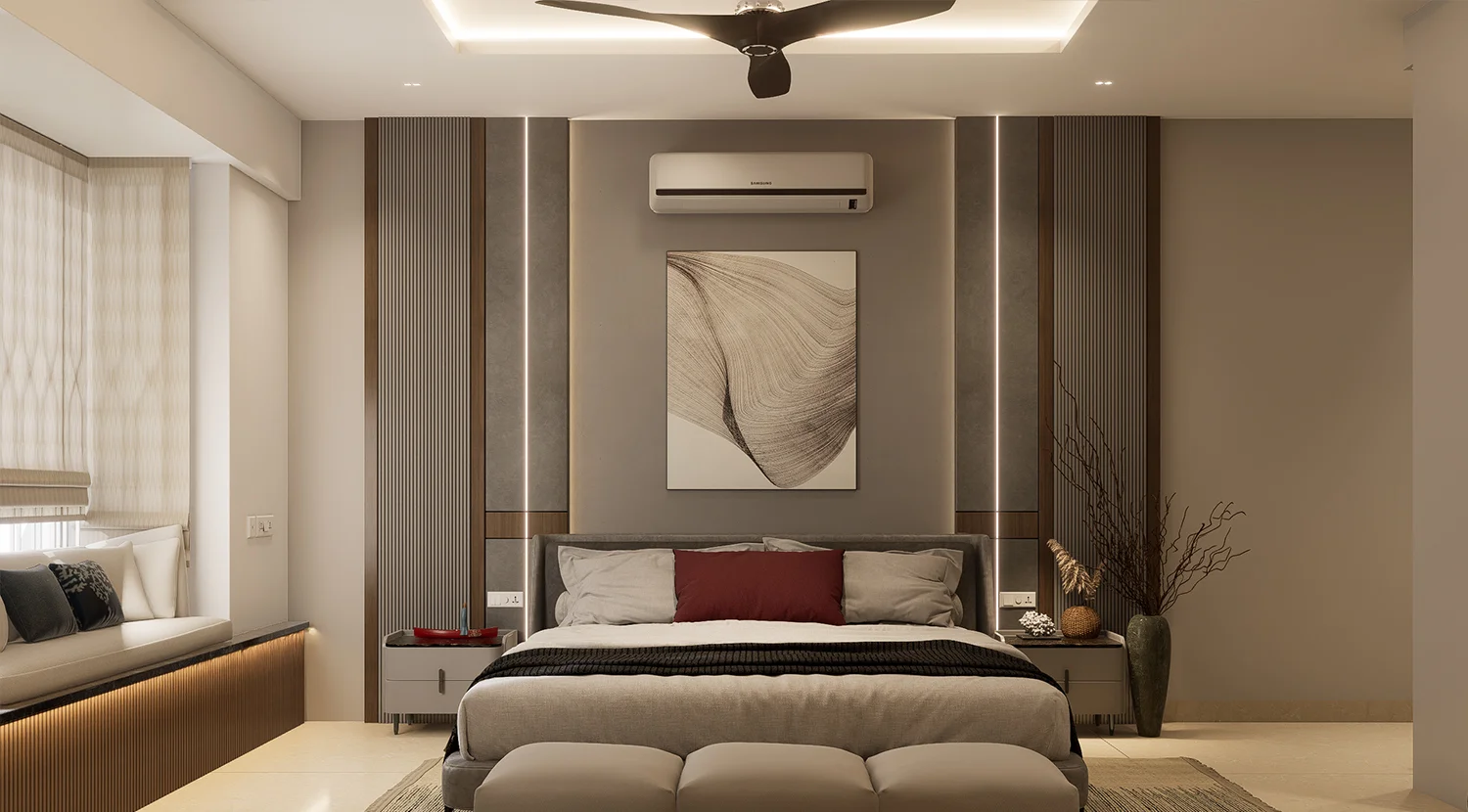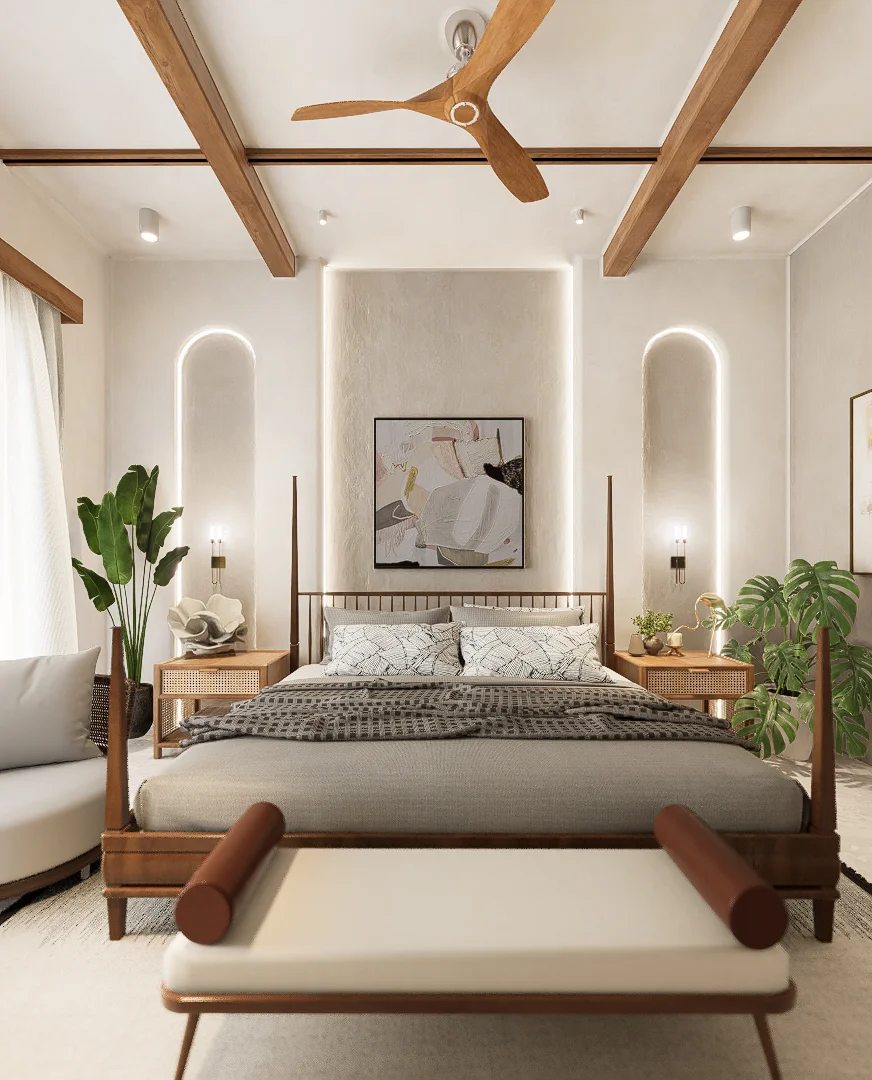


[MASTER BEDROOM DESIGN]
THE BEDROOM IS WHERE LUXURY IS MOST INTIMATE
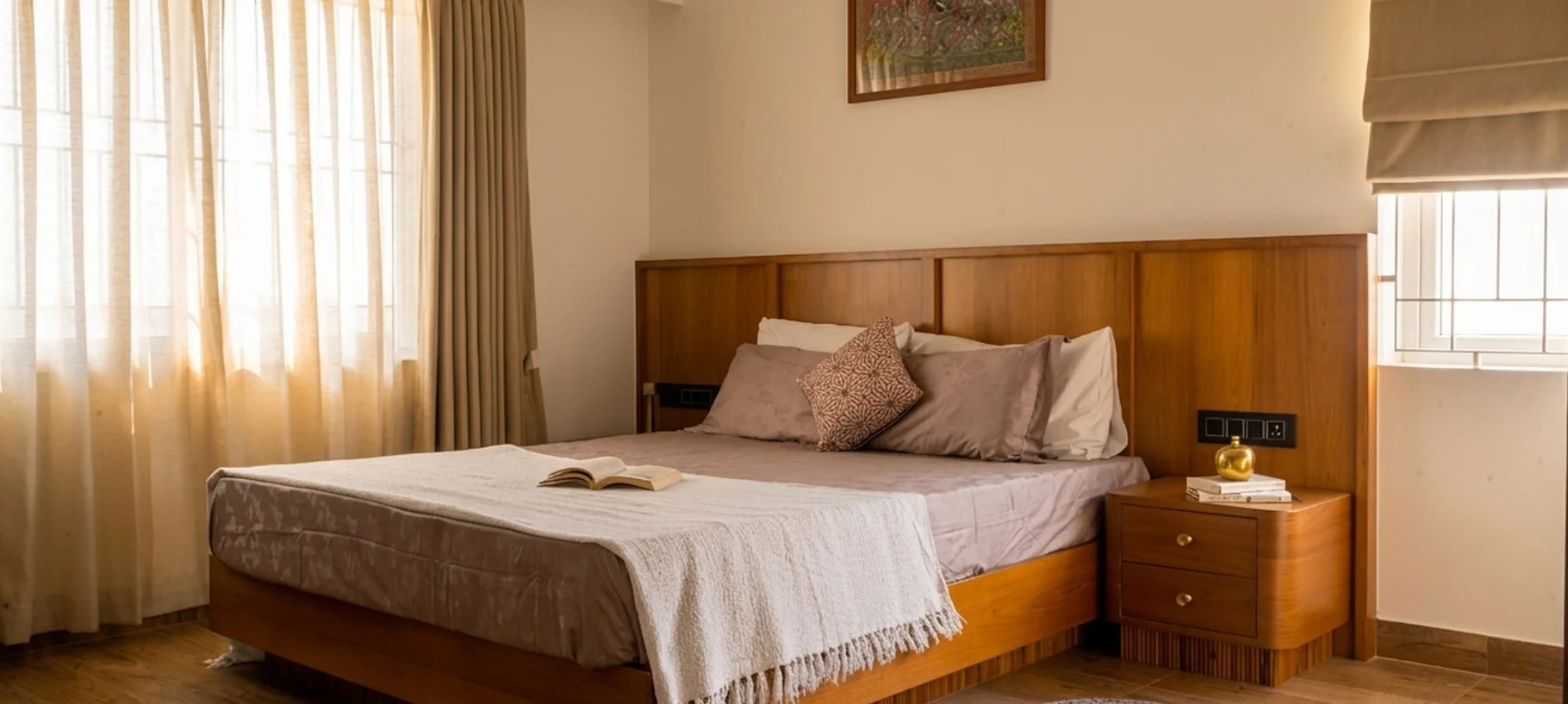
Most luxury in homes is public. A beautiful living room impresses guests. An exceptional kitchen demonstrates refinement to people who visit. But the master bedroom is private. It’s where you spend a third of your life. Where you wake in the morning and fall asleep at night. Where you’re alone or with someone you’re closest to. Where comfort matters more than impression.
This fundamentally changes how a luxury bedroom should be designed.
A bedroom that looks luxurious in photographs but feels uncomfortable when you’re lying in bed is a failure, regardless of how expensive the materials or how sophisticated the aesthetic. A bedroom that looks modest but feels like a sanctuary, where light is controlled perfectly, where sound doesn’t intrude, where every material feels refined when touched, is genuinely luxurious.
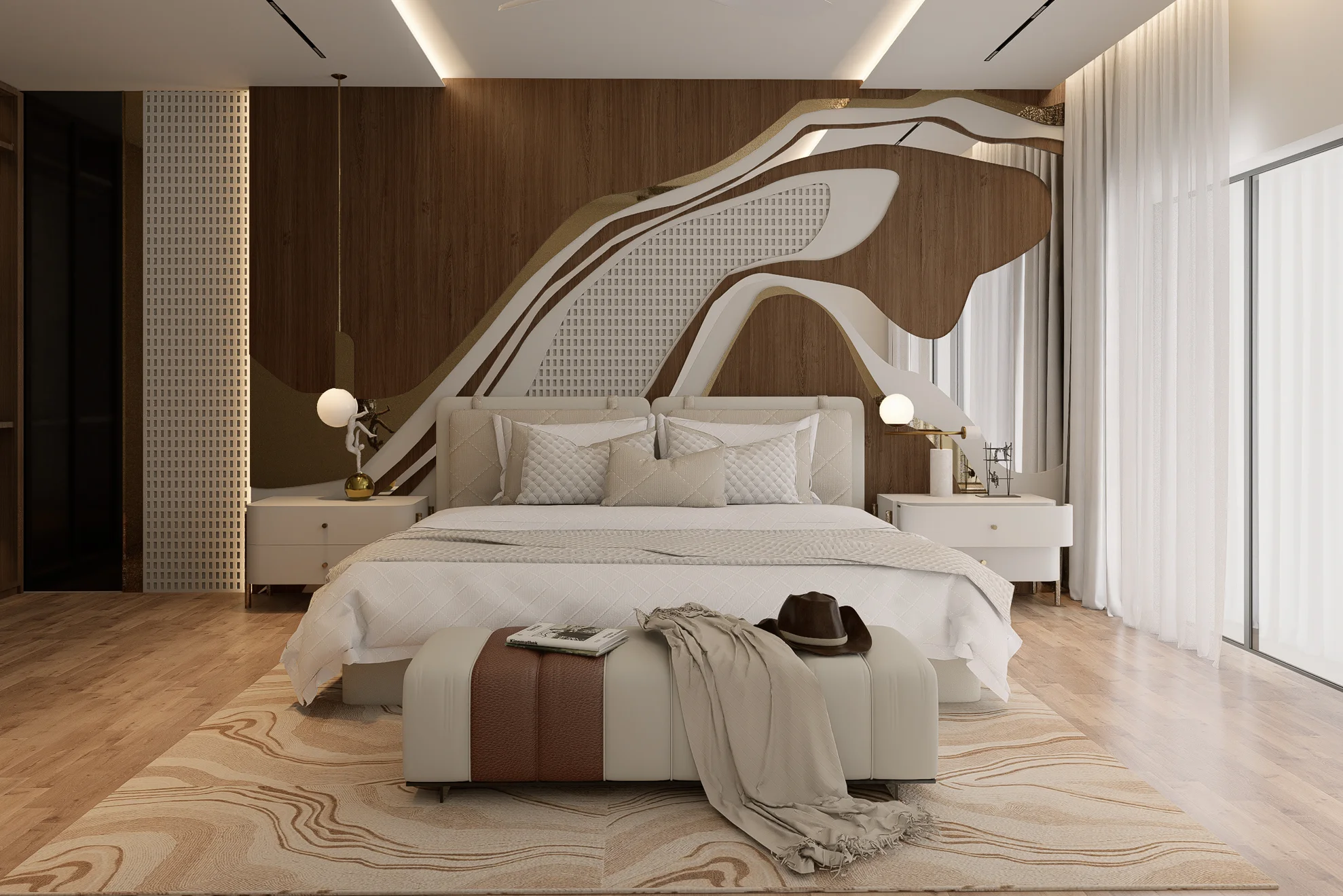
Most bedroom design inverts these priorities. It prioritizes visual luxury: expensive headboards, dramatic lighting fixtures, statement wallcoverings. It neglects acoustic comfort. It ignores lighting control. It specifies materials chosen for appearance rather than for how they feel at close range where you experience them most intimately.
Insyde Studio has completed more than fifty master bedrooms across Bangalore. Every one was designed with understanding that luxury in a bedroom is experienced through comfort, quiet, and refined materials at close range. Not through visual statement.
WHAT LUXURY MEANS IN A BEDROOM
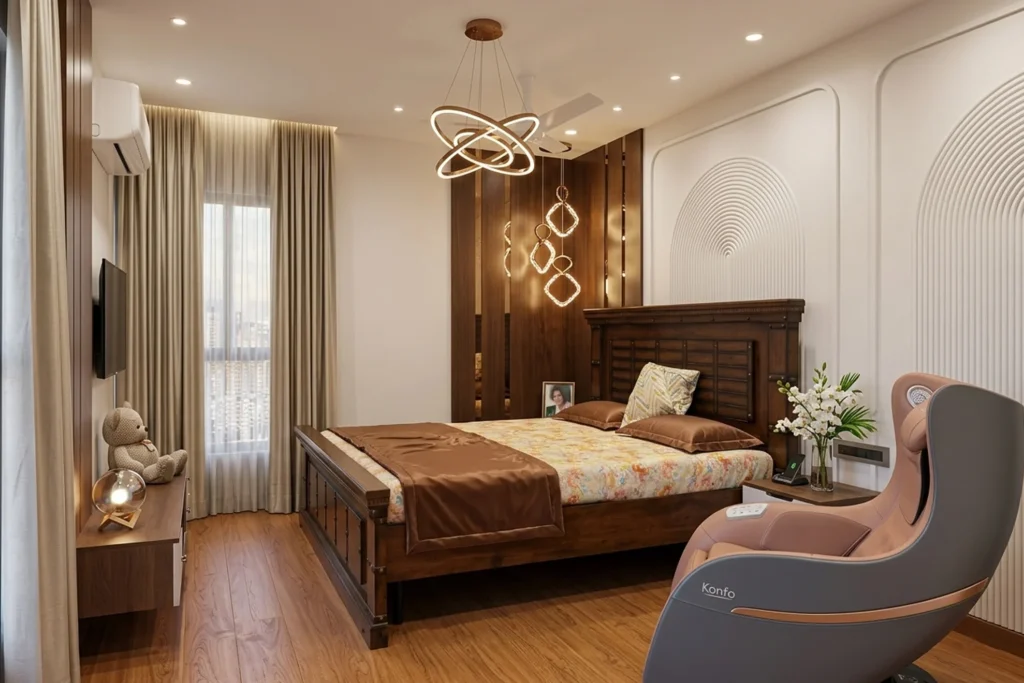
Luxury in a public room, a living room or a dining room, is about impression and refinement. In a bedroom, luxury is about sanctuary.
Acoustic comfort is paramount. A bedroom should be quiet. Street noise, traffic sound, noise from adjacent rooms, sound traveling from other parts of the home all interrupt sleep and diminish the sense of sanctuary. A luxurious bedroom manages sound strategically. It muffles external noise. It prevents sound from traveling to adjacent spaces. It creates a quiet environment where you can think, rest, and sleep undisturbed.
This is not optional. A bedroom without acoustic consideration is fundamentally uncomfortable, regardless of how beautiful it looks.
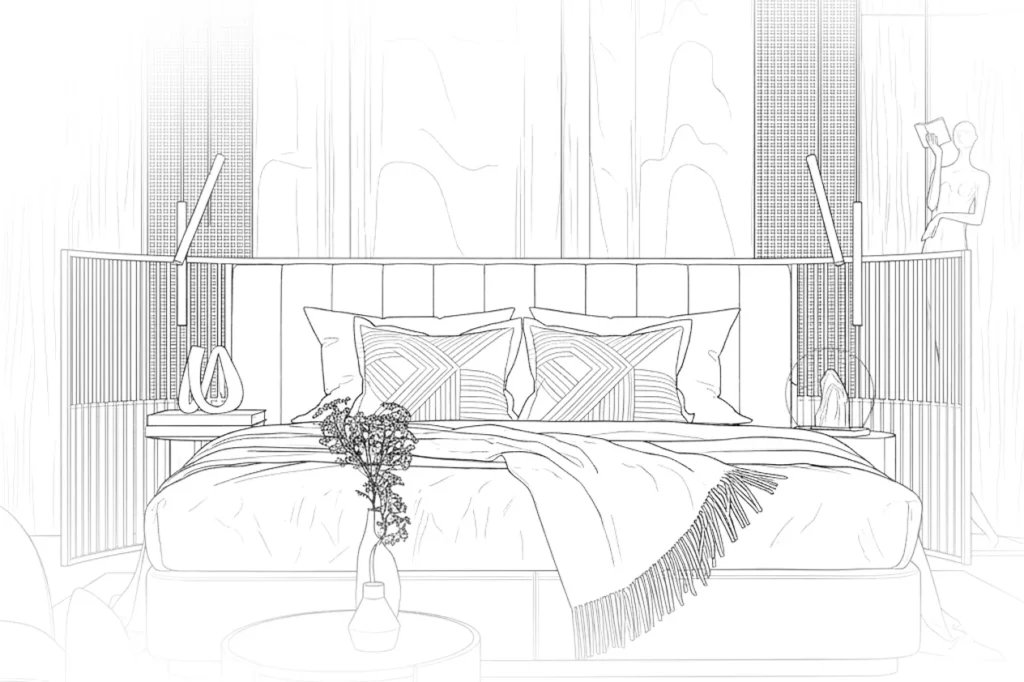
Lighting control is essential. A bedroom requires different light conditions at different times. Morning light should be controllable so you’re not woken by sunlight if you want to sleep later. Evening light should be warm and dim to support sleep preparation. Reading light should be available without illuminating the entire room. Complete darkness should be achievable when sleeping. A bedroom without thoughtful lighting control is uncomfortable for sleeping and waking.
Again, this is functional necessity, not aesthetic preference.
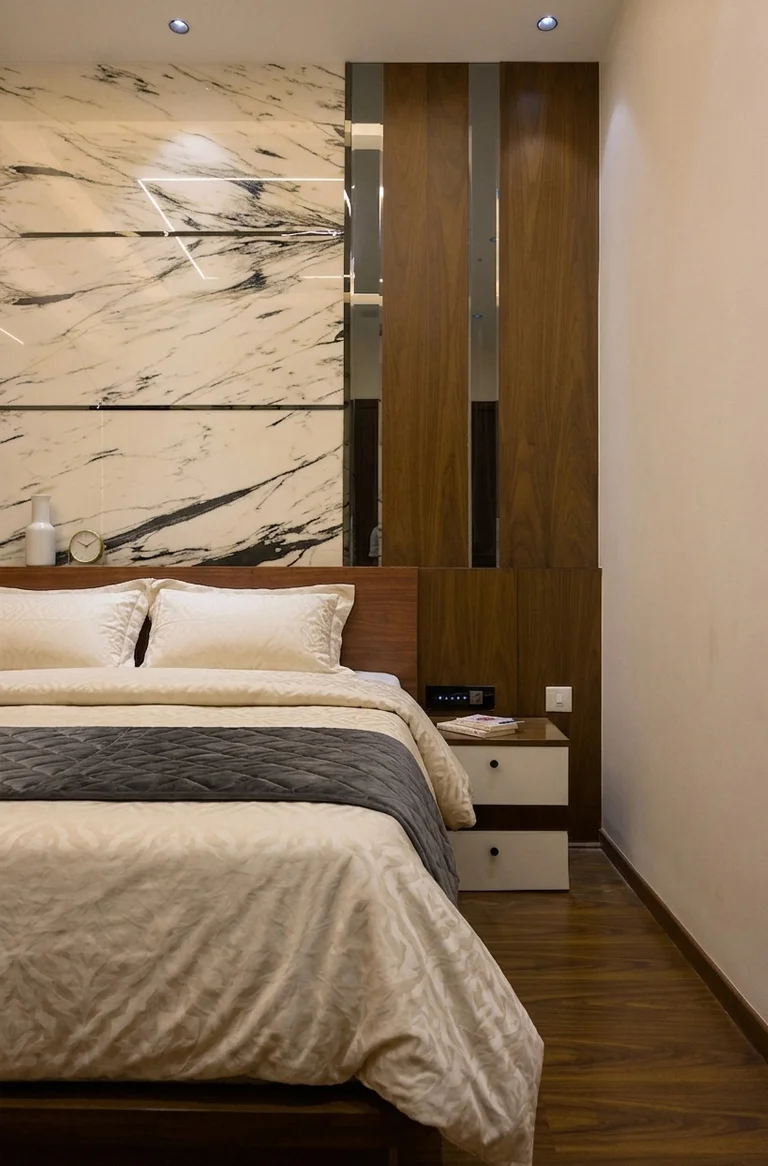
Material quality at close range is distinctive. In a living room, you view materials from a distance. In a bedroom, you touch materials constantly. Your skin contacts the sheets, pillows, and blankets nightly. Your hands touch the nightstand surface, the lamp base, the door handle, the light switch dozens of times daily. Your feet walk on the floor barefoot. Materials you experience this intimately must feel refined. Cheap sheets feel cheap. Synthetic materials feel plastic-like. Rough finishes feel harsh. In a bedroom, material quality is experienced directly and constantly. It either enhances the sense of sanctuary or diminishes it.
Thermal comfort matters. A bedroom should maintain consistent temperature. Too warm and you sleep poorly. Too cold and you’re uncomfortable. A bedroom well-insulated and with appropriate heating or cooling maintains thermal comfort. In Bangalore, this typically means managing afternoon heat in south or west-facing bedrooms, ensuring adequate ventilation, and avoiding materials that absorb and radiate heat.
Privacy is absolute. The bedroom door should close securely and provide complete visual privacy. Windows should have treatments that prevent anyone outside from seeing into the room. The bedroom should be a space where you’re completely private. This is both practical and psychological. The sense of privacy contributes to the sense of sanctuary.
Simplicity enhances comfort. Bedrooms with excessive decoration, numerous colors, competing patterns, or visual complexity feel cluttered and anxiety-inducing. A truly luxurious bedroom is visually restful. Color is limited. Patterns are minimal. Decoration is purposeful. Surfaces are clear. The visual simplicity allows your mind to rest.
HOW WE DESIGN MASTER BEDROOMS
We begin by understanding your sleep and waking patterns.
We prioritize acoustic comfort from the outset.
We design lighting with complete control.
We specify materials experienced at close range.
We design for thermal comfort.
We ensure absolute privacy.
We design for visual simplicity.
[MASTER BEDROOM DESIGN]
ACOUSTIC DESIGN IN BEDROOMS
Acoustic comfort is where superior bedroom design becomes evident. Most bedrooms ignore sound management completely. Insyde Studio designs acoustically sophisticated bedrooms.
ACOUSTIC DESIGN IN BEDROOMS
External sound reduction begins with windows.
External sound reduction begins with windows. Double-glazed windows with acoustic laminate reduce external noise significantly. Window position, depth, and design affect how much sound penetrates. Strategic window placement, positioning windows on the quietest walls, reduces noise exposure. Window treatments with acoustic properties add additional sound absorption.
Wall construction affects sound transmission.
Doors provide acoustic isolation.
Soft furnishings absorb sound.
Strategic furniture placement reduces sound transmission.
Acoustic ceiling treatments are sometimes appropriate.
Insyde Studio
Lighting design determines whether a bedroom is functionally comfortable or frustrating.
Ambient lighting should be dimmable and warm. Overhead recessed lights or wall sconces should be on dimmer switches, allowing adjustment from full brightness to very dim. Color temperature should be warm at 2700K or warmer to support sleep preparation and create a calming atmosphere. Harsh bright light in a bedroom is counterproductive.
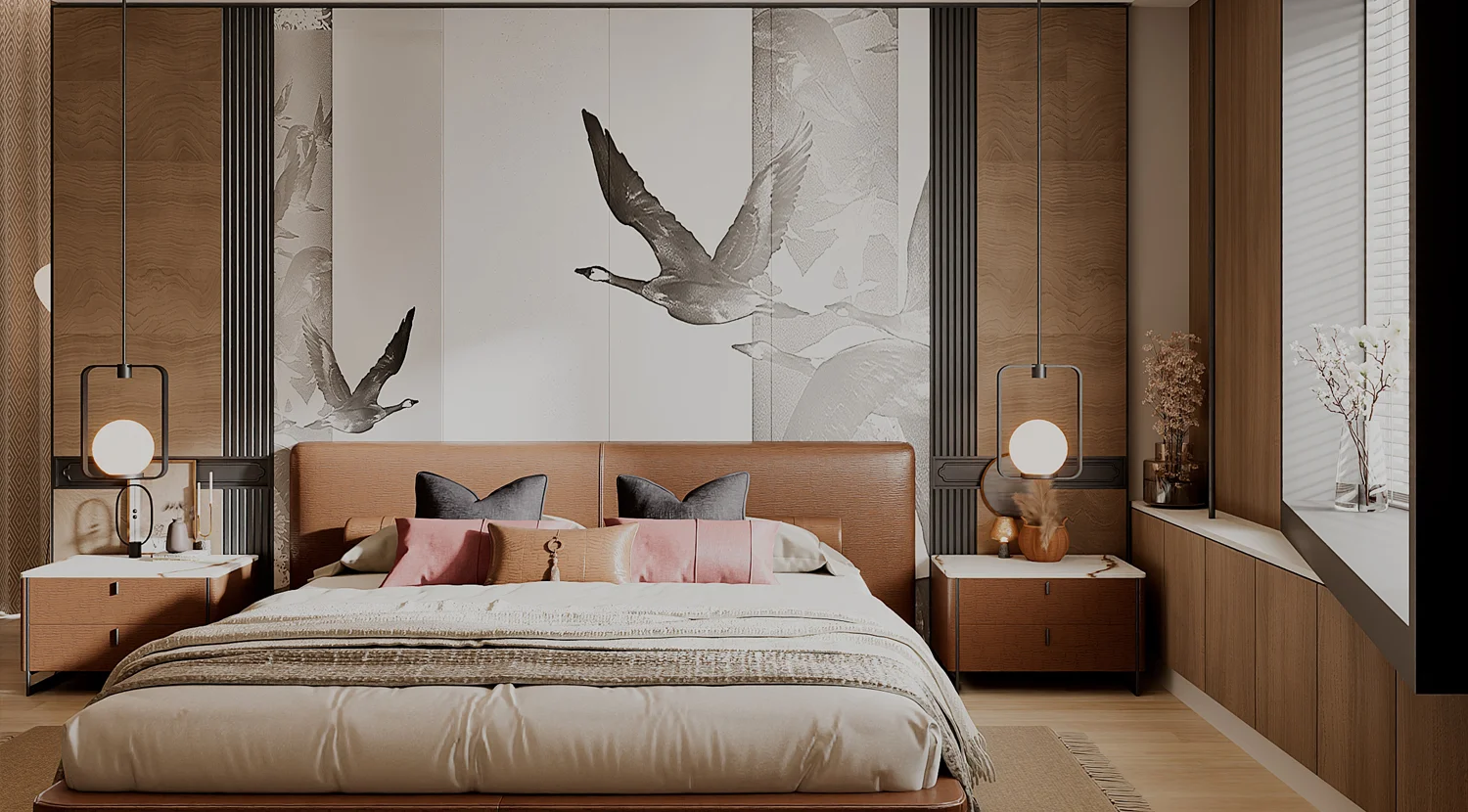
Bedside task lighting is essential. Each side of the bed should have dedicated task lighting for reading or other activities. This lighting should be independently switchable and positioned to illuminate reading material without creating glare. Bedside table lamps are typical, but we sometimes integrate lighting into the headboard or nightstand design for a refined appearance.
The height and angle of task lighting matter. Too high and light shines in your eyes. Too low and it doesn’t illuminate reading material adequately. We position lighting carefully to balance these requirements.
Window treatments control natural light completely. Blackout shades or heavy curtains should eliminate external light so you can sleep in complete darkness if desired. This is non-negotiable for sleep quality. Even small amounts of light can interfere with sleep.
Motorized window treatments allow you to control light from bed, enhancing convenience and comfort. Manual alternatives work but require getting up to adjust.
Accent lighting adds visual interest without functional illumination. Subtle lighting behind floating shelves or along baseboards can create visual appeal while remaining non-intrusive. This layer is optional but enhances the bedroom aesthetically.
All lighting should be controllable from bed. Bedside switches for ambient and task lighting. Motorized window treatments. The ability to adjust your light environment without leaving bed is essential for comfort.
Lighting should transition smoothly for different times of day. Morning might involve gradually increasing ambient light to support waking. Evening might involve gradually dimming light to prepare for sleep. Modern lighting systems can support these transitions automatically.
COLOR AND FINISH STRATEGY IN BEDROOMS
Color in a bedroom should support rest and sanctuary, not create visual drama.
Neutral wall colors create visual restfulness. Warm grays, soft creams, pale beiges, muted taupes feel calm and sophisticated. They don’t stimulate or agitate. They provide a backdrop that recedes visually, allowing you to rest without visual distraction.
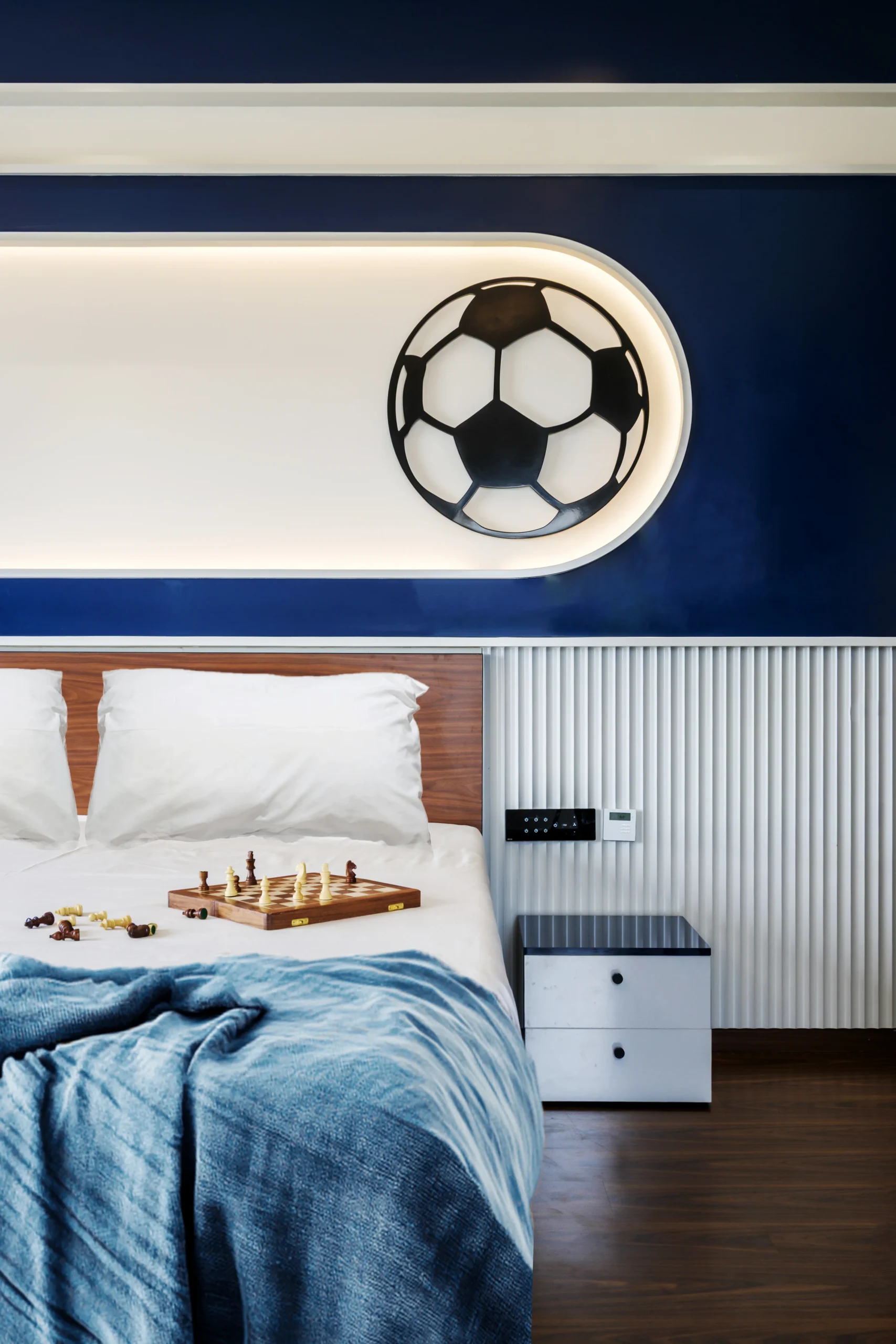
We avoid bold colors, high-contrast patterns, or visually complex finishes in primary bedroom spaces. These create visual stimulation rather than rest.
Matte or satin finishes feel refined and calm. Glossy finishes feel cold and industrial. Matte finishes feel warm and sophisticated. Textured finishes like Venetian plaster add visual interest without gloss. These finishes support the restful aesthetic.
Soft furnishings introduce color and texture without visual harshness. While walls remain neutral, bedding, pillows, and throws can introduce subtle color or texture. These should still be restful in soft blues, warm grays, natural tones rather than bold or high-contrast.
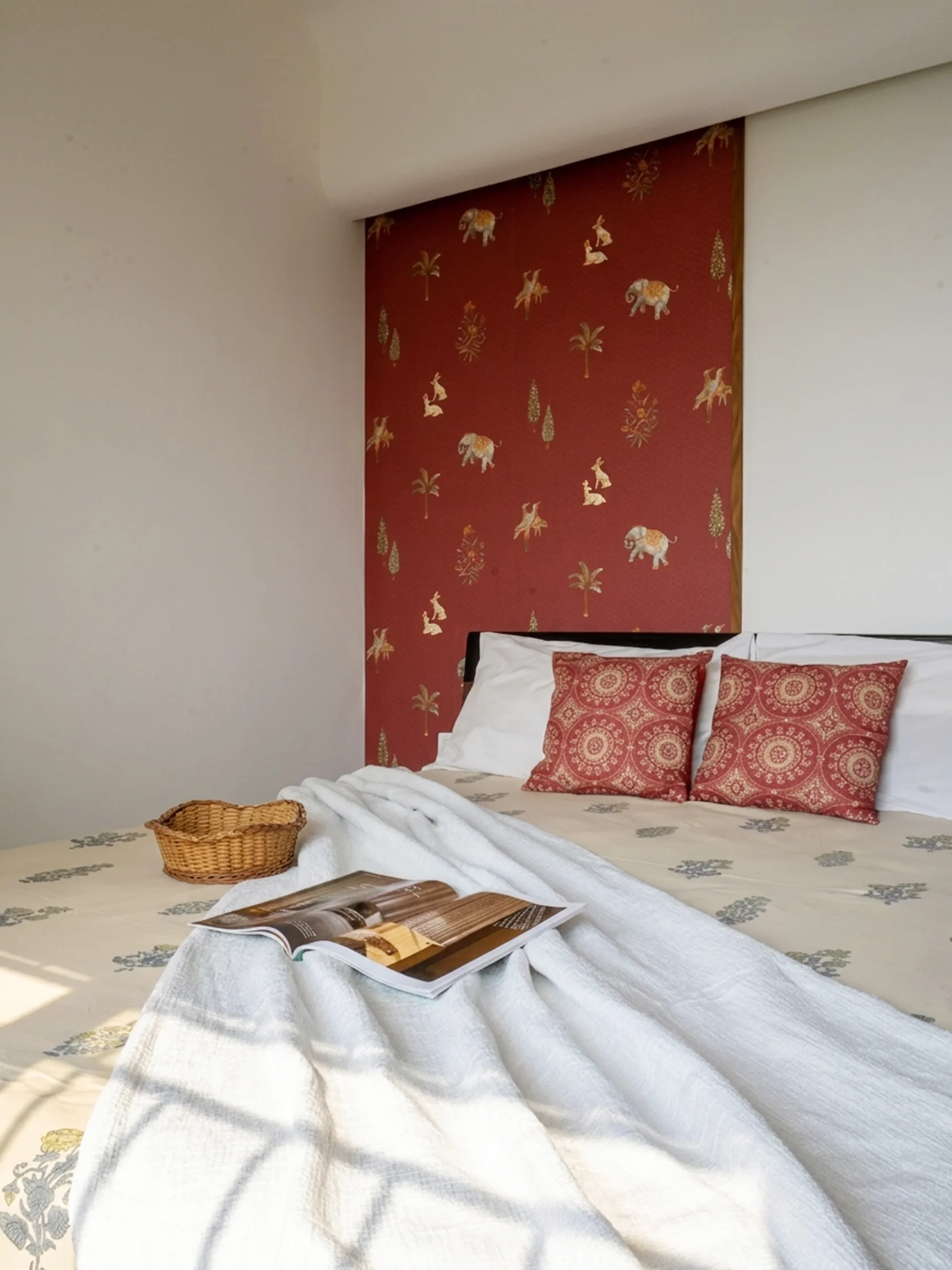
Minimal pattern and decoration support simplicity. While patterned wallcovering or elaborate headboards can be visually striking, they create visual complexity that’s counterproductive in a bedroom. Simplicity including clean lines, clear surfaces, and purposeful decoration creates the restful environment essential for sleep.
Personal items and artwork should be thoughtfully curated. Rather than filling walls with numerous pieces, select a small number of artwork or photographs that you find genuinely meaningful. The bedroom should feel personal and restorative, not like a gallery.
FLOORING IN BEDROOMS
Flooring in a bedroom should feel pleasant underfoot and support acoustic comfort.
Natural wood flooring in primary bedroom areas feels warm and refined.
Carpet in bedrooms provides acoustic absorption and warmth.
Transitions between bedroom and other spaces should be elegant.
Avoid cold materials like tile or stone in primary sleeping areas.
WINDOW TREATMENTS FOR BEDROOMS
Window treatments serve multiple functions in a bedroom: light control, privacy, thermal comfort, and aesthetic refinement.
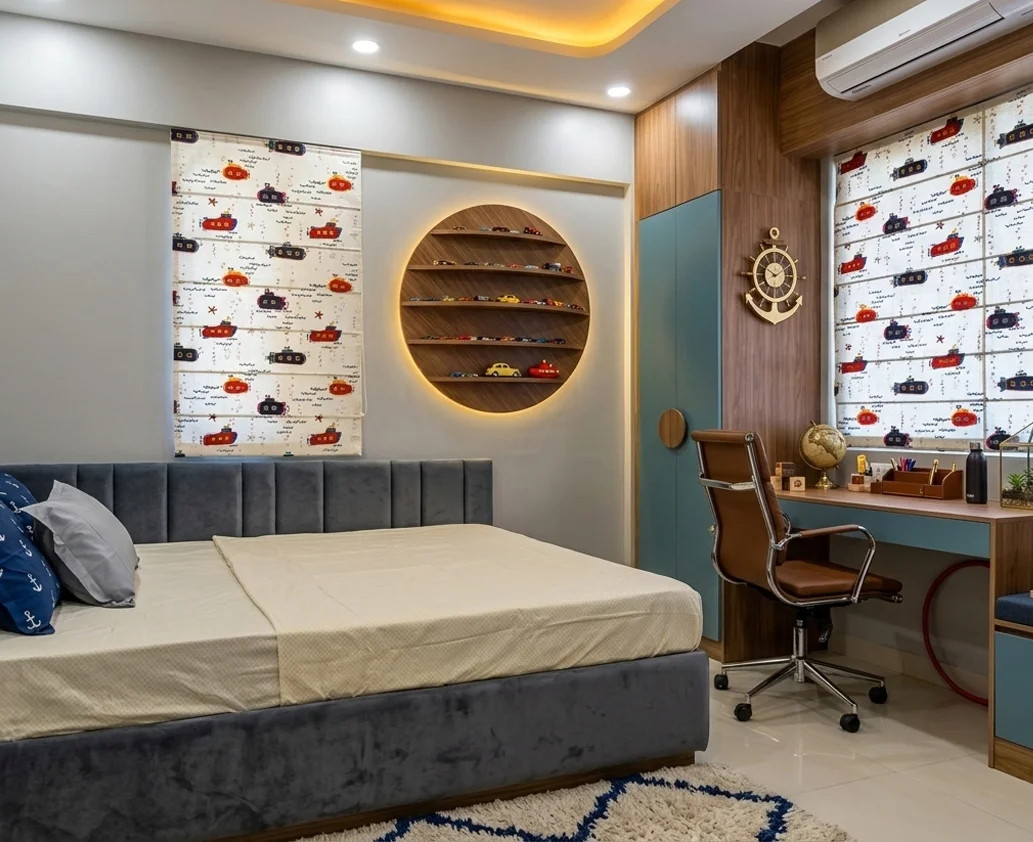
Blackout shades or curtains are essential
Motorized treatments enhance comfort.
Layering provides flexibility.
Aesthetic refinement matters.
Thermal performance is secondary to darkness and privacy.
THE BEDROOM LAYOUT AND SPATIAL PLANNING
How a bedroom is organized affects how comfortable it feels.
The bed placement is fundamental. The bed should be positioned to maximize the sense of sanctuary. Ideally, the headboard is against an interior wall, not an exterior wall where external noise enters. The bed should be visible from the door, avoiding a startled feeling when entering. The bed positioning should leave clear sightlines and circulation space.
The nightstand positioning should support bedside comfort. Nightstands should be positioned for convenient access from bed with lamp, water glass, phone, and book. They should be sturdy and beautifully finished since they’re surfaces you touch regularly.
Additional furniture should be minimal. A bedroom with numerous pieces of furniture feels cluttered and reduces the sense of sanctuary. Essential furniture including bed, nightstands, and perhaps a small seating area is sufficient. Avoid unnecessary pieces that consume space and create visual complexity.
A small seating area can enhance comfort. A comfortable chair by a window or in a corner provides space for reading or reflection. This should be a single chair or small bench, not numerous seating pieces. The area should feel intimate and purposeful.
Circulation space should be clear. Moving through the bedroom should feel easy. Pathways between bed and door, bed and bathroom, and bed and windows should be clear. This both enhances safety and creates a sense of openness.
Storage should be integrated, not visible. Wardrobes, drawers, and storage should be built-in or designed to integrate seamlessly. Visible clutter including clothes and items on surfaces diminishes the sense of sanctuary. The bedroom should feel organized and clear.

READY TO DESIGN YOUR HOME?
If you’re considering a residential project and want to understand how a complete home should be designed, where your master bedroom is genuinely luxurious through comfort and refinement rather than visual drama, let’s begin a conversation.
A thoughtfully designed master bedroom doesn’t exist in isolation. It’s part of how your entire home functions. How it connects to your ensuite bathroom and dressing area. How it maintains privacy while integrating into your home’s overall design. How acoustic comfort, lighting control, and material refinement work throughout your residence. How your bedroom sanctuary supports your wellbeing as part of a complete home design.
When you design your complete home with this integrated thinking, every room becomes better. Your bedroom becomes a true sanctuary.
Book a discovery meeting with our team. Share how you sleep, what disturbs you, what makes you feel comfortable. Discuss your aesthetic preferences and your practical requirements. We’ll assess your space and present a comprehensive design approach for your complete residence, one where your master bedroom is designed as a genuine sanctuary and integrated as part of the whole.
Your bedroom deserves this level of attention to comfort and refinement. Let’s create it together.