

[POOJA ROOMS AND MANDIRS: SACRED SPACE DESIGN]
THE POOJA ROOM IS YOUR HOME’S SPIRITUAL CENTER
Every home needs a sacred space. A place where daily spiritual practice happens. A space that feels separate from the everyday rhythms of living. A place where you sit with intention and connect with what matters spiritually.
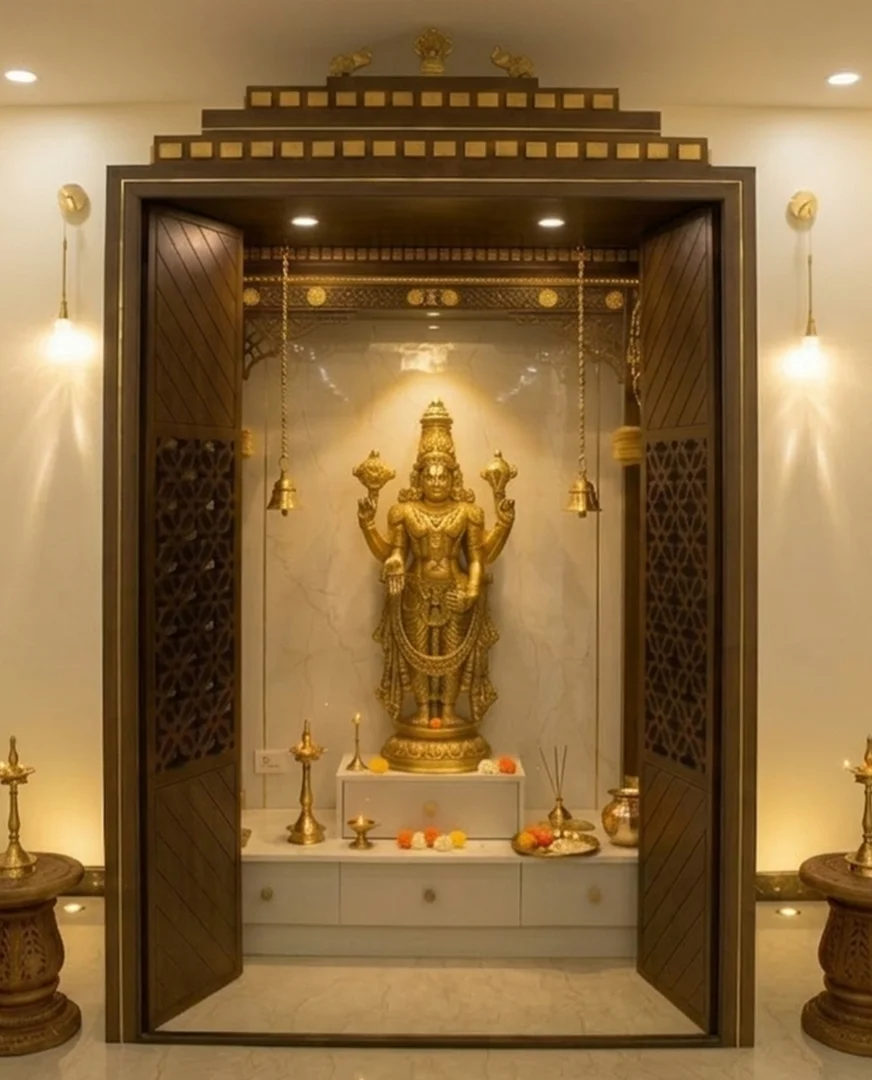
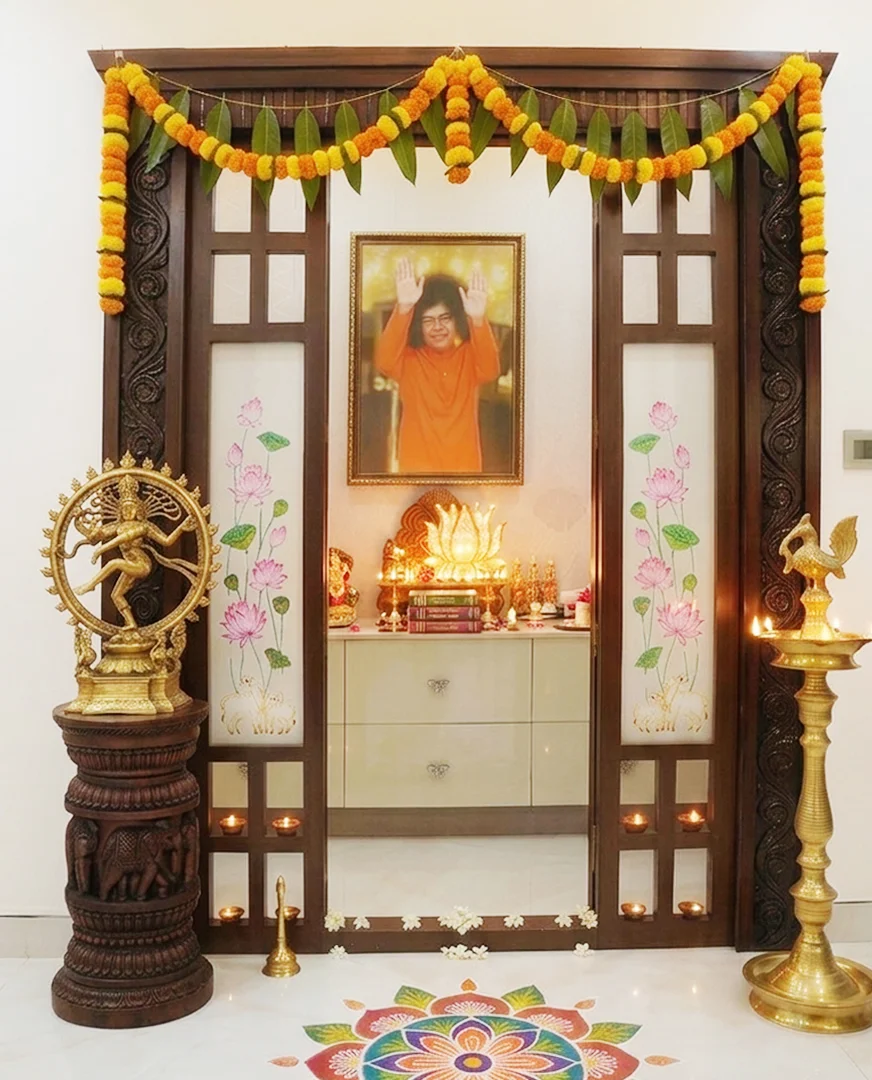
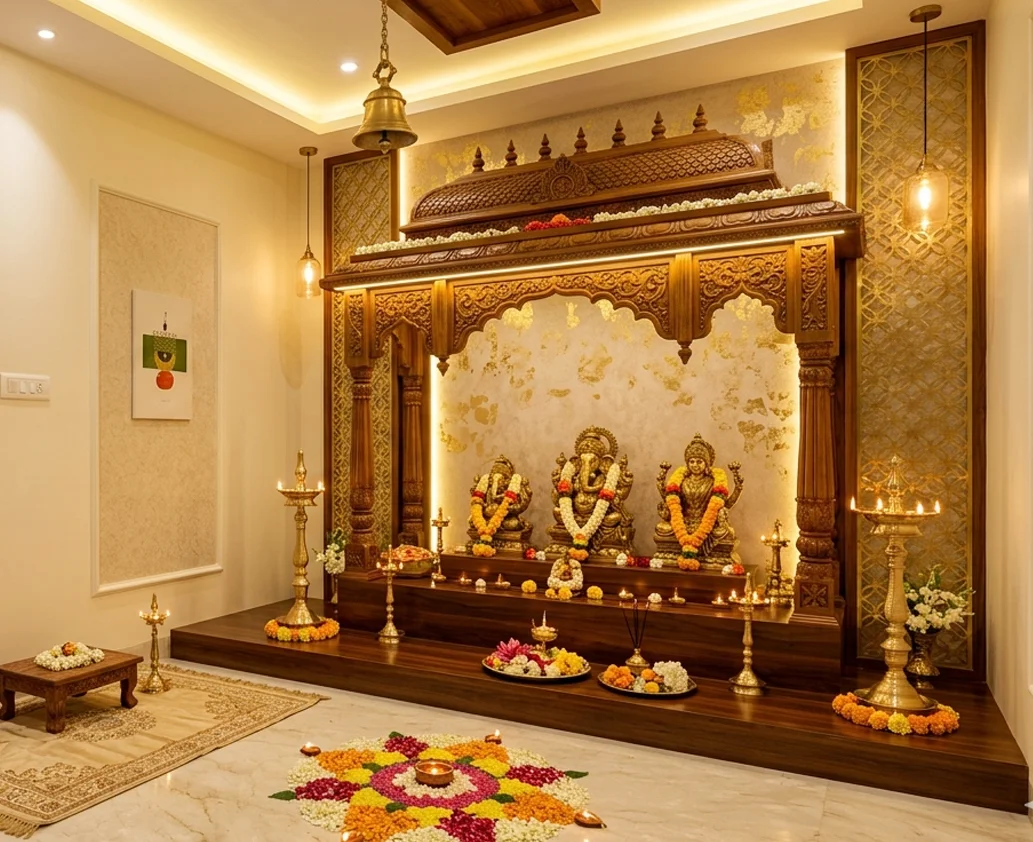
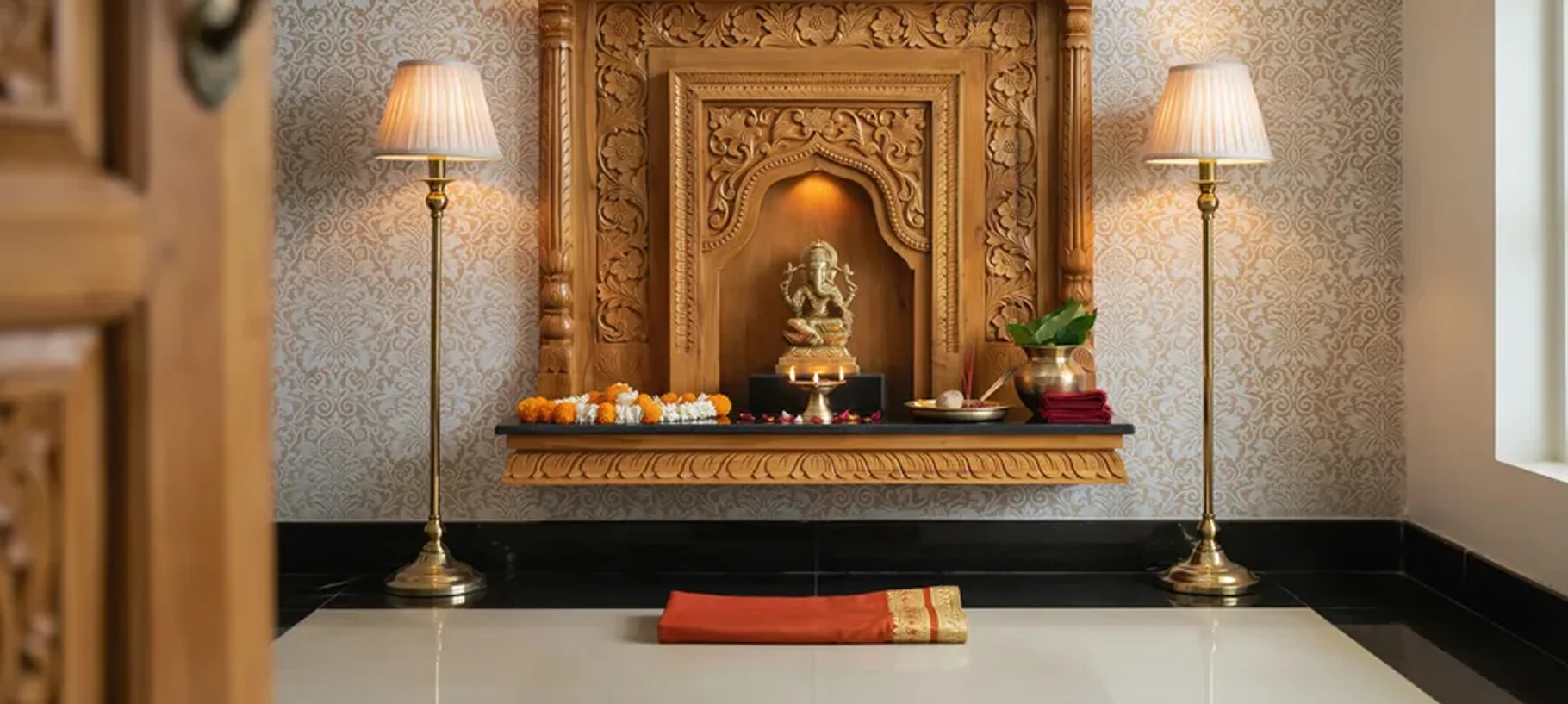
For many Indian households, this sacred space is the pooja room or mandir. It might be a small alcove with a simple shelf holding a few icons. It might be an elaborate dedicated room with elaborate cabinetry, sophisticated lighting, and carefully designed seating. Regardless of scale, the pooja room serves a specific spiritual function that distinguishes it from other rooms in your home.
A poorly designed pooja room undermines its spiritual purpose. Cluttered shelving that looks disorganized. Inadequate lighting that creates shadows rather than illumination. Materials that don’t feel appropriate for sacred practice. A space that feels hurried or temporary rather than intentional. Over time, a pooja room that feels disorganized or temporary becomes a space you visit less frequently. The daily spiritual practice suffers.
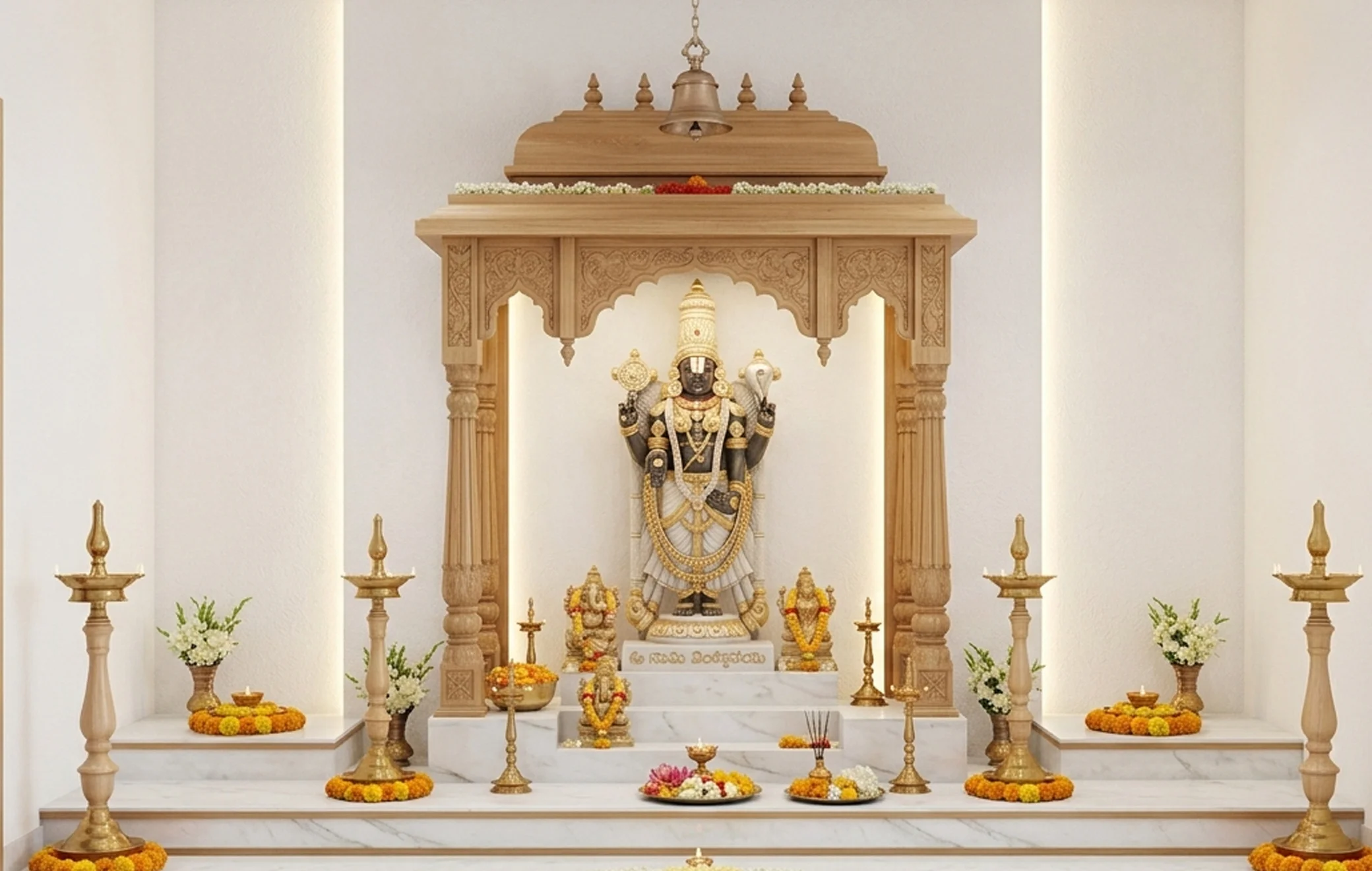
A well-designed pooja room supports and deepens spiritual practice. Beautiful materials that feel sacred and timeless. Thoughtful organization that keeps everything accessible and uncluttered. Lighting that creates reverence and clarity. Proportions and materials that communicate the space’s significance. A pooja room that feels genuinely sacred becomes a space you visit more frequently. Your daily spiritual practice deepens and strengthens.
This distinction between a poorly designed and a well-designed pooja room is profound. It affects not just the appearance of the space but the quality and consistency of your spiritual practice.
Most pooja room design in India relies on prefabricated mandirs or generic cabinetry adapted for spiritual use. Prefabricated mandirs are mass-produced, typically made from particle board or thin plywood with synthetic finishes. They’re often ornately decorated with excessive carving and embellishment. Generic cabinetry designed for other purposes is repurposed as pooja storage. Neither approach creates a space that truly serves sacred function.
Custom pooja room design begins with understanding your specific spiritual practice and how your household uses sacred space. What deities do you worship? What is your daily practice?
Do you perform elaborate pujas or simpler daily rituals? Who participates in your practice? How much time do you spend in the pooja room daily? What items do you need to store? How do you want to sit while performing puja?
This understanding informs a design that serves your actual spiritual practice. The result is a sacred space that feels genuinely sacred, supports your practice beautifully, and becomes an integral part of your daily life.
WHY PREFABRICATED MANDIRS FAIL SACRED FUNCTION
Mass-produced mandirs, while affordable and readily available, typically fail to serve sacred function well.
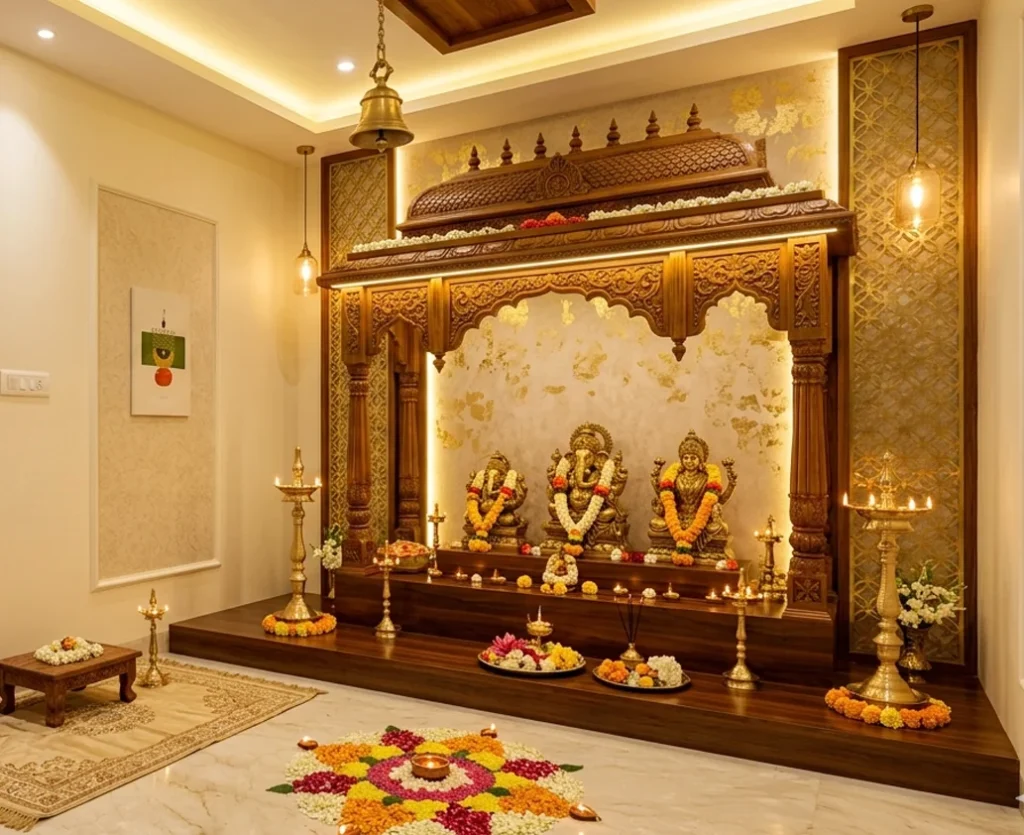
Excessive ornamental carving feels kitsch rather than sacred. Many prefabricated mandirs feature elaborate carved decoration intended to convey grandeur. Instead, this often creates a visually cluttered appearance that feels overwrought rather than reverent. The decoration distracts rather than focusing attention on the deities and the practice.
Thin materials feel insubstantial. Prefabricated mandirs typically use particle board or thin plywood with synthetic veneers. These materials feel lightweight and temporary. They lack the substantial, enduring quality that sacred spaces require. Materials that feel temporary undermine the sense that this is a dedicated, significant space.
Synthetic finishes don’t age beautifully. Particle board and thin plywood, when sealed with synthetic finishes, don’t develop patina or mature gracefully. They maintain their plastic appearance indefinitely. After a few years, seams begin separating and finishes crack. The space looks cheap and neglected rather than sacred and maintained.
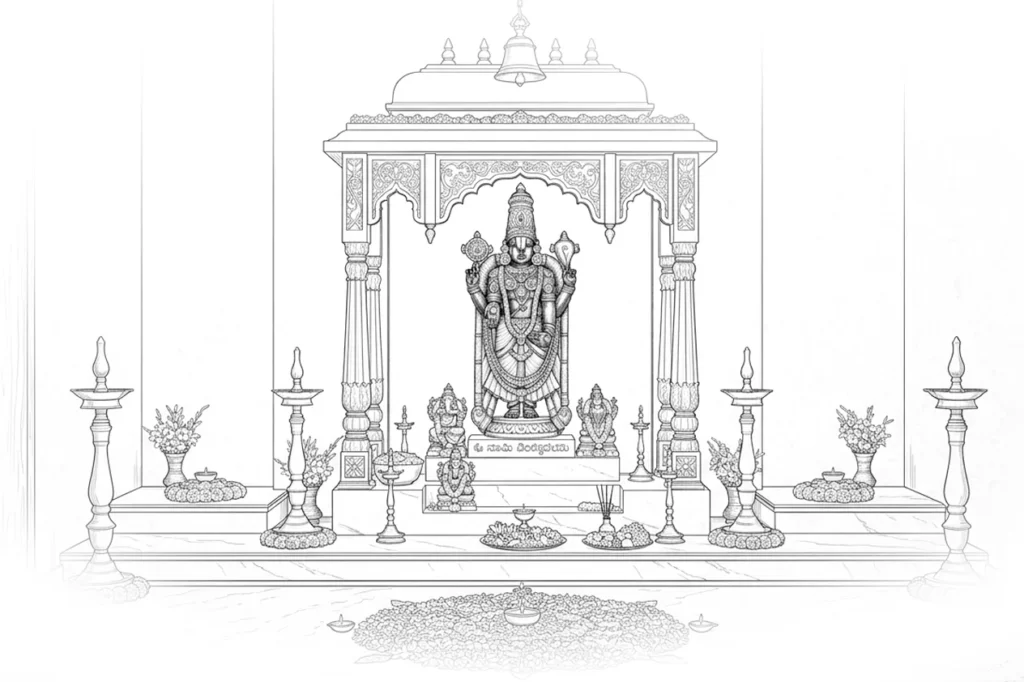
Organization is generic and often inadequate. Prefabricated mandirs provide generic shelving and storage that doesn’t accommodate your specific ritual items well. Shelves that are wrong heights. Storage that’s either excessive or inadequate for your actual items. The result is a cluttered-looking space where items don’t fit properly.
Lighting is typically poor or absent. Many prefabricated mandirs include small LED lights that provide minimal illumination. Inadequate lighting creates shadows and makes it difficult to see the deity clearly. Poor lighting undermines the reverent feeling you’re trying to create.
Proportions often feel wrong. Prefabricated mandirs come in standard sizes that don’t necessarily match your space or your aesthetic. A too-large mandir dominates and overwhelms. A too-small mandir looks inadequate. Standardized proportions rarely feel exactly right for your specific space.
Visual design often clashes with home aesthetic. Most prefabricated mandirs have a distinctive heavy carved style that doesn’t integrate well with contemporary home design. The mandir looks like a separate object placed in your home rather than a designed element that belongs there.
The fundamental problem with prefabricated mandirs is that they prioritize ornamental decoration over sacred function. They’re designed to look impressive, not to serve spiritual practice well.
SACRED GEOMETRY AND PROPORTION IN POOJA ROOM DESIGN
Symmetry creates balance
Vertical emphasis creates elevation.
Central focal point organizes the space.
Proportional relationships create harmony.
Thresholds create transition
Enclosure creates containment.
MATERIALS FOR SACRED SPACES
The materials used in pooja room design affect both how the space functions and how it feels spiritually.
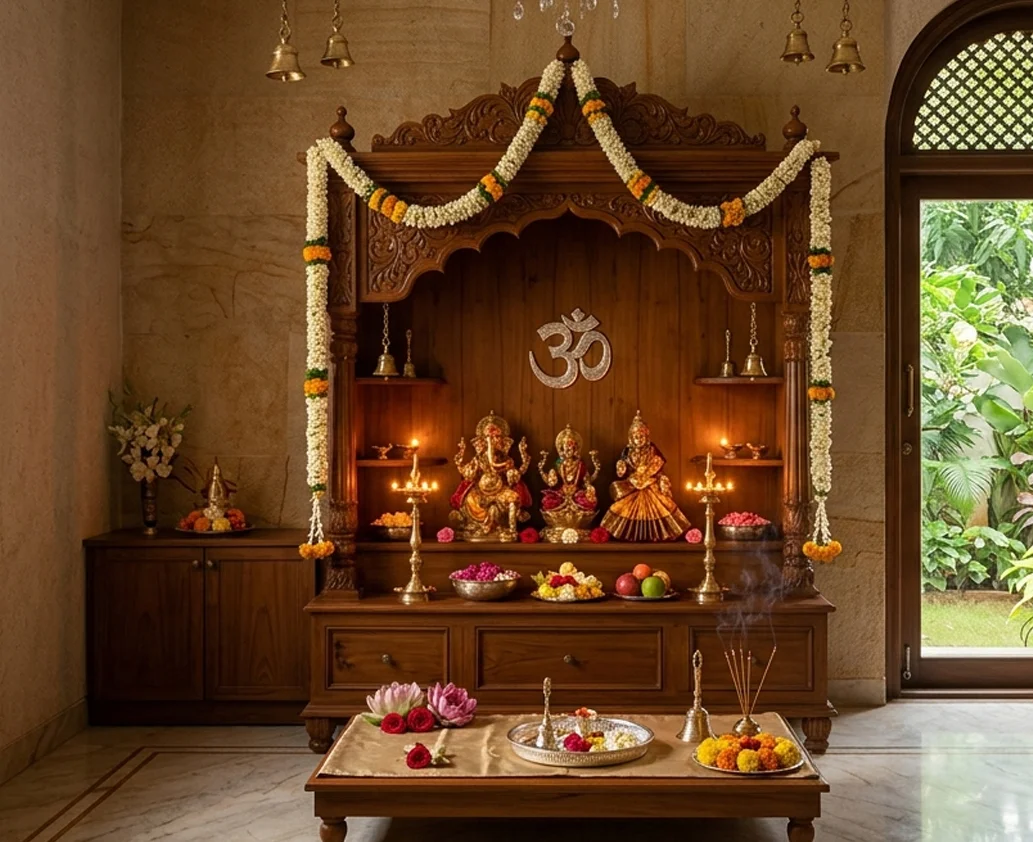
Solid wood is the appropriate material for sacred spaces. Hardwoods like teak, oak, walnut, and other traditional woods are appropriate for sacred spaces. These materials are enduring, age beautifully, and develop patina over time. The natural character of wood feels organic and honest rather than artificial.
Teak is particularly appropriate for pooja rooms. Teak is durable, naturally oil-rich, and has been traditionally used for temples and sacred structures for centuries. Teak that’s carefully maintained develops a beautiful silver patina over time. The wood feels noble and timeless.
Plywood should be high-quality. If the entire design is built from solid wood, costs can be high. High-quality plywood with veneer of appropriate wood is a reasonable alternative to solid wood. Quality plywood with proper veneer and finishing looks beautiful and feels substantial. Cheap particle board should be avoided in sacred spaces.
Natural finishes honor the wood. The finish should allow the natural wood character to remain visible. Natural oil finishes that highlight grain. Light stains that deepen wood tone while showing grain. Matte lacquer finishes that feel smooth without glossiness. The finish should feel warm and natural, not plastic.
Bright gloss finishes should be avoided in pooja rooms. Highly reflective surfaces feel artificial and distracting. The space should feel calm and reverent, not shiny and commercial.
Stone and marble create permanence. Stone flooring, marble shelving, or stone accents communicate permanence and sacredness. Marble in particular has been traditionally used in temples. A marble shelf for the primary deity, marble flooring, or marble accents create a sense of timelessness.
Natural stone with subtle variations in color and veining feels more sacred than uniform manufactured stone. The natural irregularities communicate that this is a genuine natural material, not a fabrication.
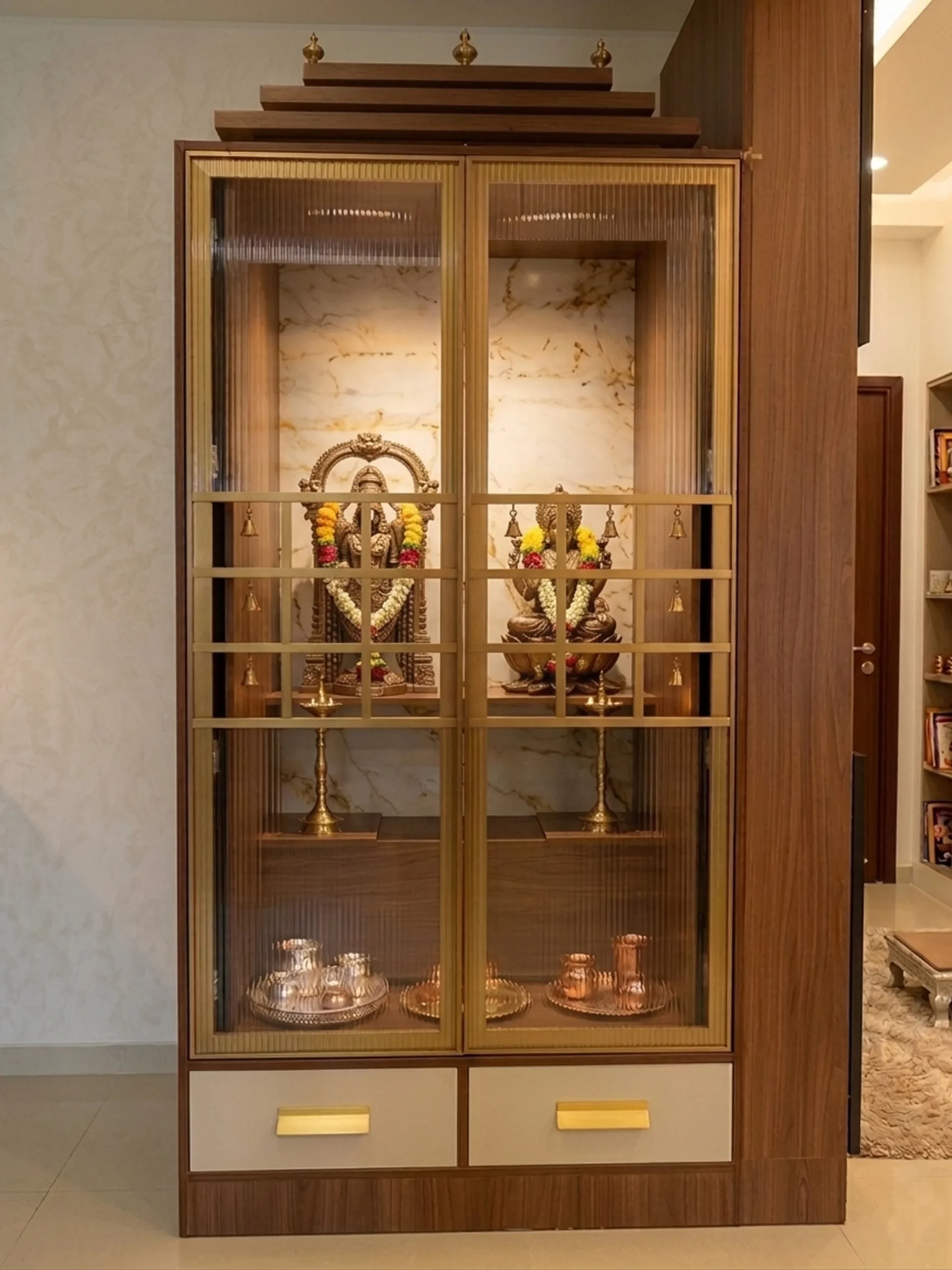
Brass and copper have sacred significance. Brass and copper have been traditionally used in temples and sacred objects for millennia. Brass oil lamps, copper vessels, and brass architectural elements feel appropriate in pooja spaces. These metals develop patina over time, creating a sense of history and sacredness.
Hardware in pooja rooms should be brass or copper rather than stainless steel. Door handles, hinges, and other hardware in these metals feel more sacred and appropriate than industrial stainless steel.
Avoid plastic and synthetic materials. Plastic components, synthetic veneers, and artificial materials should be avoided in sacred spaces. These materials feel temporary and cheap. They don’t age gracefully. They communicate that this space isn’t valued as permanent and significant.
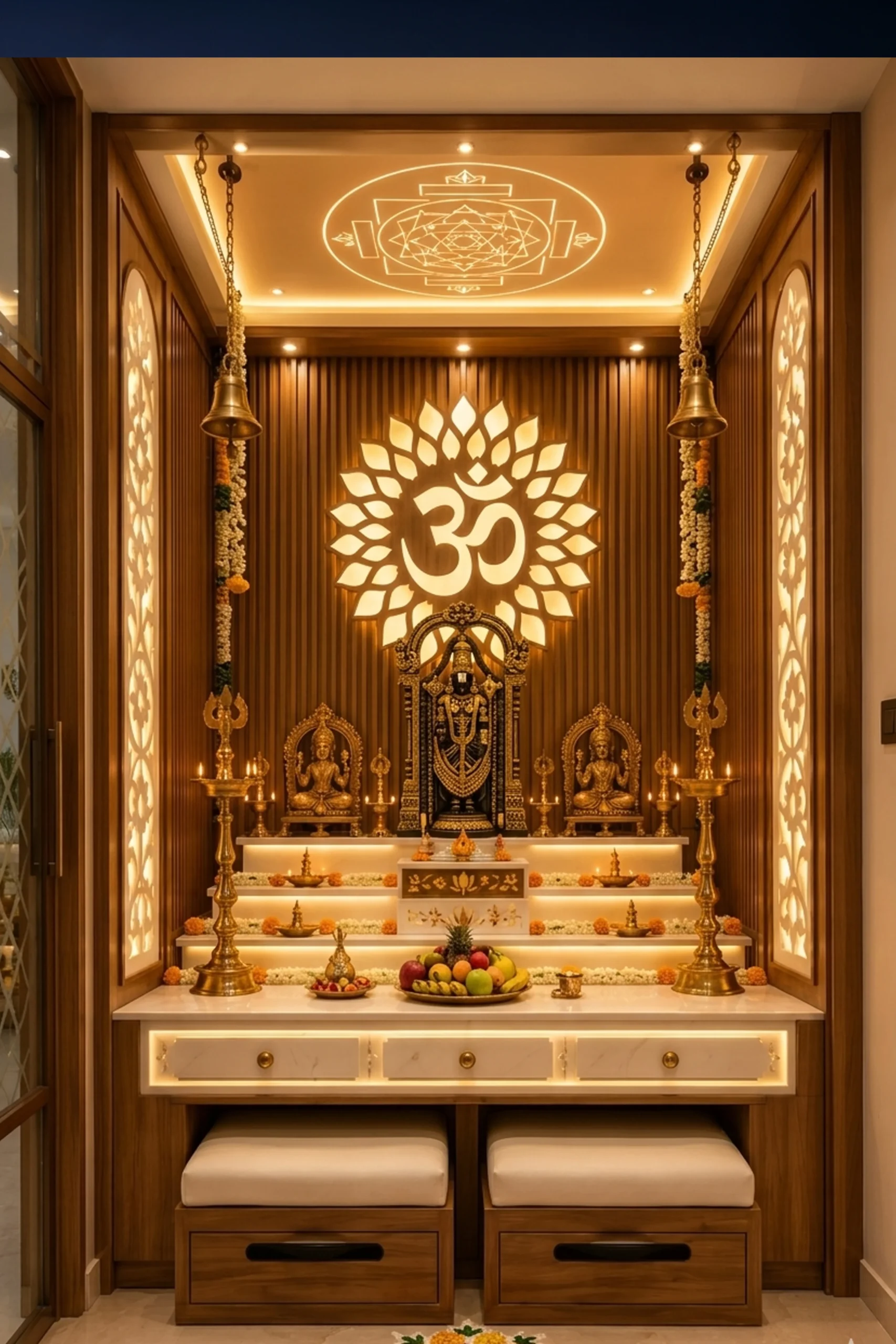
Lighting materials should be refined. If the pooja room includes lighting, fixtures should be refined and appropriate. Brass or copper fixtures. Warm-toned light. Simple elegant designs rather than ornate or ostentatious fixtures. Lighting should illuminate without drawing attention to itself.
Natural light when possible. If a window can provide natural light to the pooja room, this is ideal. Natural light creates a sense of connection to the divine. The quality of natural light changes throughout the day, creating a sense that the space is alive and dynamic. If the pooja room is interior without natural light, carefully designed artificial lighting can create a similar effect.
LIGHTING DESIGN FOR POOJA ROOMS
Illumination should be warm and soft.
The intensity should be sufficient to see clearly without being harsh or glaring. Bright enough to see the deity and perform rituals, but not so bright that it feels institutional or creates harsh shadows.
The primary deity should be well-lit
Secondary deities should be visible but less prominent.
Ambient lighting should create atmosphere
Oil lamps or candles add spiritual presence
Dimming capability adds flexibility.
Avoid colored lighting
Consider seasonal and daily changes
Insyde Studio
A well-designed pooja room accommodates your specific spiritual practice and ritual items efficiently.
A well-designed pooja room accommodates your specific spiritual practice and ritual items efficiently.
Categorize your ritual items. Begin by understanding what items you actually use in your spiritual practice. Flowers for offerings. Incense. Oil for lamps. Bells and other implements. Ritual vessels. Prasad containers. Books or texts. Different households will have different collections of items based on their specific practice.
Understanding what you actually use informs what storage is truly needed. This prevents designing excessive storage for items you don’t actually need.
Dedicate space appropriately. Primary deities should have prominent, well-lit space. Secondary deities should have visible but less prominent space. Ritual implements should be accessible and organized. Flowers and offerings should be stored freshly. Everything should be accessible and uncluttered.
Height and reach should accommodate use. The primary deity should be at eye level when you sit in your typical meditation or puja posture. Not so high that you’re looking up at an uncomfortable angle. Not so low that you’re looking down. The comfortable eye-level position when seated is appropriate.
Frequently used ritual items should be within easy reaching distance. Items used less frequently can be on higher or lower shelves. This creates efficient workflow during your practice.
Grouping by function aids organization. Group similar items together. All offerings and offering vessels in one area. All incense and oil lamps in another. All books and texts together. This functional organization makes it easy to locate items during practice and keeps the space visually organized.
Closed storage for seasonal items. Items you use seasonally or less frequently can be in drawers or cabinets rather than open display. This keeps the open display areas uncluttered and focused on frequently used and visually important items.
Fresh flower storage. If you regularly offer fresh flowers, the pooja room should include appropriate storage for fresh flowers—a small vase or container where flowers can be kept fresh. Fresh flowers are important in many practices, so appropriate storage is essential.
Cleanliness and maintenance. The design should facilitate easy cleaning and maintenance. Smooth surfaces that can be easily wiped. Minimal dust-catching ornamental details. Organized storage that allows you to clean easily. A space that’s easy to maintain stays beautiful and feels properly cared for.
SEATING AND MEDITATION AREAS
How you sit during your spiritual practice affects the space design.
Seating should be comfortable and at appropriate height. If you sit on the floor on a cushion or mat, the primary deity should be at appropriate height when you’re seated at floor level. If you sit on a meditation bench or low seat, the height calculations change accordingly. The design should accommodate your actual sitting position and posture.
A dedicated seating area creates focus. Rather than practicing from an arbitrary location, a dedicated seating area—whether marked by flooring, a step, or spatial definition—creates a clear area for practice. Sitting in the same spot for practice creates a ritual and focuses energy.
Meditation area should feel enclosed. If there’s space for a dedicated meditation area within or immediately adjacent to the pooja room, this should feel somewhat enclosed and separate from the casual household space. This might be created through partial walls, an alcove, or simply careful spatial definition.
Seating area should face the primary deity. The orientation should place you facing the primary deity. This natural orientation creates focus and connection. The design should facilitate this orientation rather than requiring you to twist or turn.
Back support might be appreciated. Depending on your practice and physical comfort, the seating area might include something to lean against—a wall, cushioned support, or backrest. This allows extended meditation or practice without physical strain.
Flooring should feel appropriate. Whether marble, wood, or other material, the flooring in the seating area should feel refined and appropriate for sacred space. Flooring material should be easy to clean since ritual practice sometimes involves flowers, oils, or other offerings that might leave traces.
ALTAR DESIGN AND DEITY ARRANGEMENT
The arrangement of deities and the altar design creates the visual and spiritual focus of the pooja room.
Primary deity placement creates hierarchy.
Secondary deities and icons are arranged subordinately.
Symmetrical arrangement creates balance.
Elevation emphasizes importance
Open display focuses attention.
WATER AND OFFERINGS FACILITIES
Custom wardrobes and walk-in dressing rooms should integrate beautifully with adjacent master bedroom and bathroom spaces.
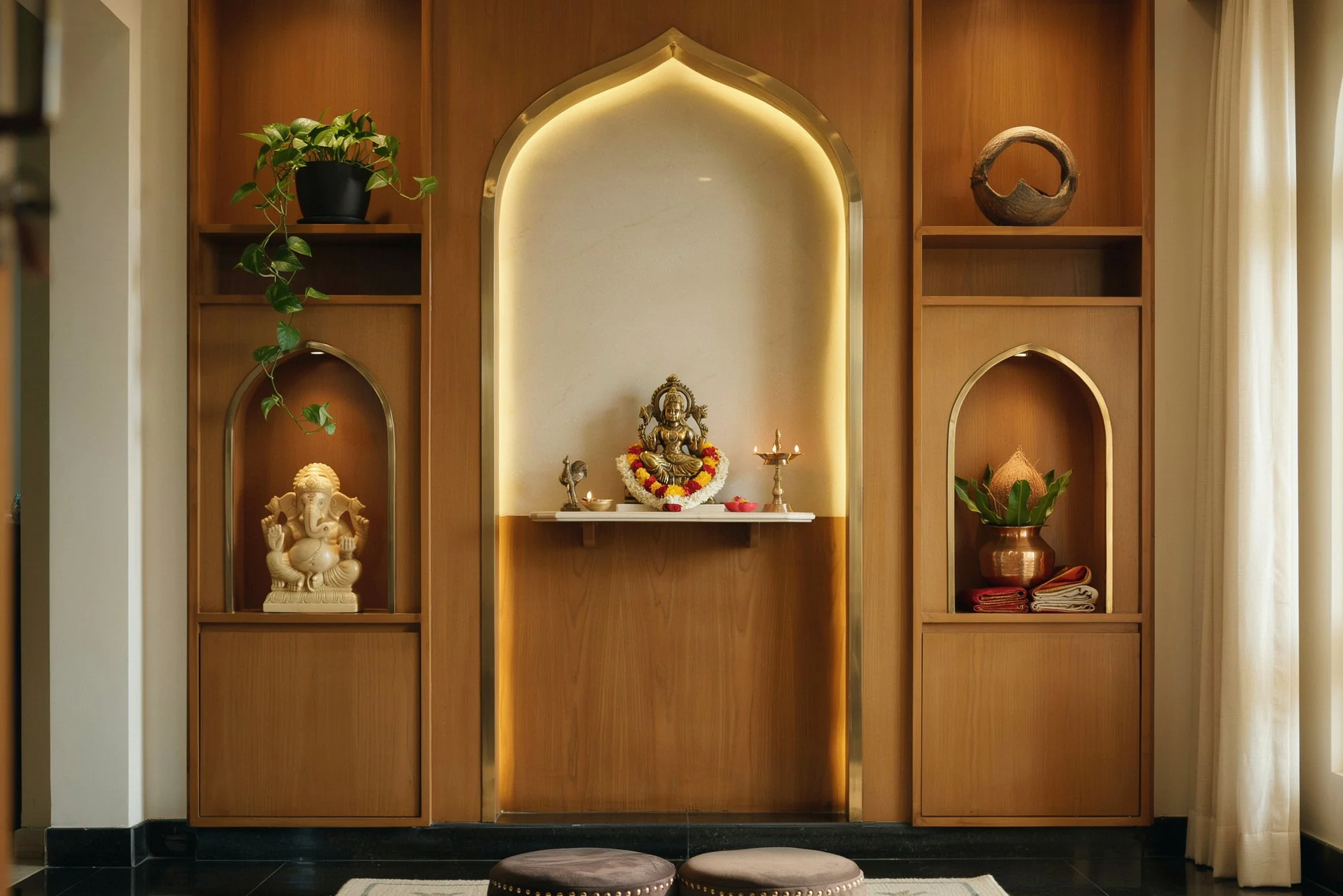
Water access should be convenient.
Flower storage and display.
Prasad and offering storage.
Incense storage and burning
Oil lamp placement
Cleanliness considerations
THE POOJA ROOM’S RELATIONSHIP TO THE HOME
How the pooja room relates to the rest of your home affects both its function and its spiritual significance.
Physical separation creates sanctuary. The pooja room should feel separate from the everyday living spaces. This might be achieved through a dedicated room, an alcove with clear boundaries, or simply careful spatial definition. The separation signals that this is sacred space, not casual living space. This creates a transition between the everyday and the sacred.
Accessibility should be convenient. While the pooja room is separate and sacred, it should be conveniently accessible. You should be able to visit for daily practice without awkward navigation through other spaces. If the pooja room requires a circuitous path to reach, you’re less likely to visit regularly.
Privacy and quiet. The pooja room should offer privacy from casual household traffic and activity. A location away from high-traffic areas. Sound isolation so household noise doesn’t intrude on your practice. Windows with privacy if the room is visible from outside. The space should feel quiet and undisturbed.
Connection to natural light when possible. If the pooja room can access natural light, this creates a sense of connection to the divine and the natural world. A window providing morning light. Connection to outdoor space. This natural light transforms the space throughout the day.
Integration with home aesthetics. While the pooja room is separate and sacred, it should still integrate aesthetically with the home. Materials and finishes that coordinate with the overall home design. Architecture that feels intentional rather than like a separate object placed in the home. The pooja room should feel like a designed element of the home, not a foreign addition.

CREATING YOUR SACRED SPACE
Whether you need a pooja room in a new home, want to redesign an existing pooja space, or are creating a dedicated spiritual sanctuary, custom design creates space that truly serves sacred function.
Book a consultation with our team. We’ll discuss your spiritual practice, understand your needs, assess your space, and explore how we can create a pooja room that beautifully serves your spiritual life.
Your spiritual practice deserves a space designed specifically for it. Not a mass-produced mandir. Not generic cabinetry adapted for sacred use. A genuinely sacred space, thoughtfully designed to support and deepen your devotion.
Let us help you create this sacred sanctuary in your home.