

THE INDIAN KITCHEN IS NOT A WESTERN KITCHEN
Most kitchen design in India copies Western precedents. Open-plan kitchens. Island countertops. Minimal storage. Appliances as design elements. These concepts work in homes where cooking is occasional, where one person cooks, where meals are simple.
They fail catastrophically in Indian homes.
An Indian kitchen is where multiple family members cook simultaneously. Where spice is ground fresh. Where oil splatters during tadka. Where vessels are large and numerous. Where storage requirements are substantial. Where the kitchen is closed off from living spaces because cooking creates heat, smoke, and smell. Where efficiency and functionality matter more than Instagram aesthetics.
Most kitchens designed by studios unfamiliar with Indian cooking patterns create spaces that are beautiful but dysfunctional. Insufficient counter space for meal preparation. Inadequate storage for the volume of vessels, spices, and dry goods an Indian household requires. Appliances chosen for appearance rather than the actual cooking demands placed on them. Materials that stain easily or require constant maintenance.
Insyde Studio has completed more than thirty kitchens across Bangalore. Every one was designed specifically for Indian cooking patterns. Not adapted from Western kitchens. Not styled to look contemporary while ignoring functional requirements. Designed from first principles for how Indian families actually cook.
HOW INDIAN FAMILIES COOK
Understanding this is fundamental to kitchen design.
Multiple people cook simultaneously. An Indian meal often involves one person preparing vegetables, another managing the stove, a third handling dough or rice. The kitchen must accommodate simultaneous activity at different stations without people colliding. Counter space must be distributed. The stove area must be accessible. Prep areas must exist independently of cooking areas.
Cooking is intense and generates significant heat and smoke. Tadka creates oil splatter. Pressure cookers release steam. Frying generates smoke. Cooking on Indian stoves is not gentle. It’s vigorous. The kitchen environment must withstand this. Materials must be easy to clean after oil splatter. Ventilation must be adequate to remove smoke and heat. Finishes must not degrade from heat exposure.
Every project begins with a deep understanding of the site and client’s vision. Our process includes:
Vessels are large and numerous. A Western kitchen might have four pots and pans. An Indian kitchen has pressure cookers in multiple sizes, heavy-bottomed cooking vessels, large serving bowls, specialized equipment for specific dishes. This volume of equipment requires substantial storage. Open shelving won’t work. Random cabinets won’t work. The storage system must be designed specifically for the volume and variety of equipment used.
Spices and dry goods are stored in quantity. An Indian kitchen typically stocks thirty or more spices. Flour, rice, lentils, nuts, oils are purchased in bulk. These require organized, accessible storage. Containers must keep items fresh and protected from moisture and pests. The storage system must allow quick identification and access. This is not optional decoration. It’s essential kitchen infrastructure.
The kitchen is closed off from living spaces. Western open-plan kitchens work when cooking is minimal. In Indian homes, cooking generates heat, smoke, and smell that should not permeate living areas. The kitchen is typically a separate, enclosed room. This means the kitchen design is not part of overall home aesthetic flow. It’s a functional space that should be designed for efficiency first, aesthetics second.
Water usage is substantial. Rinsing vegetables, cleaning vessels, soaking grains—Indian cooking uses significant water. The kitchen layout must accommodate this. The sink area must be functional for these tasks. Drainage must be adequate. Water pressure must support simultaneous uses.
Cooking happens at specific times, intensely. Breakfast might involve cooking for thirty minutes. Lunch involves two to three hours of preparation. Dinner involves another two hours. These concentrated periods of intense activity require a kitchen designed for efficiency. Every step of the cooking process must be optimized. The distance between prep area and stove matters. The storage location of frequently used items matters. The accessibility of the sink matters. Small inefficiencies compound over hours of cooking.
HOW WE DESIGN INDIAN KITCHENS
Our approach differs fundamentally from studios that apply Western kitchen design principles to Indian homes.
We begin by understanding your specific cooking patterns. Do you cook elaborate meals daily or primarily on weekends? Do multiple family members cook or primarily one person? What cuisines do you cook regularly? Do you have household help who cook? What’s your spice collection size? How many guests do you typically cook for? What equipment do you use regularly?
This is not abstract questioning. We spend time in your current kitchen. We observe how you move through the space while cooking. We note where you reach for items. We see which appliances you use and which sit unused. We understand the actual requirements before we design anything.
We design the kitchen as a separate, functional space. Not as part of open-plan living. Not as a backdrop for entertaining. A dedicated cooking space where efficiency is paramount. This means layout is driven by workflow, not by how it looks from the living room. Storage is designed for quantity and accessibility, not for display. Materials are selected for performance under cooking conditions, not for aesthetic impact.
We create distinct functional zones. The prep zone where vegetables are washed and cut. The cooking zone where the stove and cooking equipment are located. The serving zone where finished dishes are plated. The cleaning zone where vessels are washed. These zones should be organized to match your cooking workflow. A right-handed person’s prep area should flow toward the stove and then toward serving. A left-handed person’s workflow might differ. We design specifically for how you move through the space.
We prioritize counter space substantially. Most kitchens have inadequate counter space for Indian cooking. We typically design with sixty percent more counter space than Western kitchens of the same size. This provides room for simultaneous prep work. Room for vessels to be placed while cooking. Room for serving dishes before taking them to the dining area. Multiple people can work without collision.
We design storage systems specifically for the volume of equipment and ingredients. Not generic cabinets. Purpose-designed storage. Deep drawers for large vessels. Vertical dividers for baking sheets and cutting boards. Spice racks organized by frequency of use. Dry goods storage in airtight containers on accessible shelves. Open shelving for frequently used items like cooking oil and salt. Closed storage for less frequently used equipment. The entire storage system is planned to optimize access and organization.
We specify ventilation adequate for Indian cooking. Generic range hoods are often insufficient. We specify powerful chimneys or downdraft systems capable of handling the smoke and heat generated by intensive cooking. We position ventilation to capture cooking vapors effectively. We ensure exhaust is directed outside, not recirculated. Inadequate ventilation creates a kitchen that smells like cooking days later. Proper ventilation maintains a fresh environment.
We choose appliances for performance, not aesthetics. Pressure cookers are essential. Induction cooktops are now standard and perform excellently. We specify high-quality, robust equipment from brands that have proven reliability in Indian kitchens. We avoid trendy appliances that don’t address actual cooking needs. We position appliances for functional access, not visual prominence.
We design the layout to minimize steps during cooking. The distance from vegetable prep area to sink to stove should be efficient. The storage location of frequently used spices should be near the stove. Cooking oil and salt should be immediately accessible. The difference between ten steps and fifteen steps during three hours of cooking is significant. We optimize for this.
MATERIAL INTELLIGENCE IN INDIAN KITCHENS
Materials in an Indian kitchen face specific challenges. Heat. Moisture. Oil splatter. Staining. Wear from heavy use. We select materials with these conditions in mind.
Countertops must withstand heat and staining. Marble is popular but problematic. It stains easily from oil and spices. It requires constant sealing. It’s vulnerable to acid from tamarind, lemon, and vinegar used in Indian cooking. We typically recommend engineered quartz or stainless steel. Quartz is non-porous, doesn’t stain, doesn’t require sealing, and performs beautifully. Stainless steel is industrial but incredibly durable. Both materials withstand the demands of Indian cooking.
Some clients insist on granite. Granite is dense and more stain-resistant than marble, but it still requires sealing and care. If you choose granite, we specify regular sealing and discuss the maintenance honestly. Granite can work but requires commitment to maintenance.
Backsplashes must be easy to clean after oil splatter. Ceramic tile is standard and appropriate. Large-format tiles with minimal grout lines are easier to clean than many small tiles. Stainless steel backsplashes are functional and industrial. We avoid materials that trap oil or require frequent cleaning. The backsplash should be wipeable and durable.
Flooring must be non-slip and easy to clean. Water and oil on kitchen floors create slip hazards. Porcelain tile with slight texture provides grip. Matte finishes are safer than glossy. We avoid marble or polished stone in kitchens because they become dangerously slippery when wet. The floor must prioritize safety and cleanability over aesthetics.
Cabinetry must be robust and moisture-resistant. Engineered wood with appropriate veneer performs well. Solid wood requires more maintenance in a humid kitchen environment. We specify quality hardware and soft-close hinges so cabinets withstand years of heavy use. We avoid particle board or low-quality materials that degrade from moisture exposure.
Paint and finishes must resist moisture and staining. We specify high-quality enamel or acrylic paint designed for kitchen environments. Matte finishes show grease marks and require more frequent cleaning. We typically recommend semi-gloss or satin finishes that clean easily but don’t look overly shiny. Textured finishes or specific paints designed for kitchens perform well in Bangalore’s humidity.
Stainless steel is used strategically. For countertops, backsplashes, or shelving, stainless steel is durable and performs excellently in Indian kitchens. It shows fingerprints and requires regular wiping, but it lasts indefinitely. It’s not decorative but it’s utterly functional.
KITCHEN LAYOUT PATTERNS FOR INDIAN COOKING
We typically design kitchens using specific workflow patterns optimized for how Indian families cook.
The galley layout with counter space on both sides and the stove positioned for efficient workflow. One person can prep on one side while another manages the stove. The layout is compact and efficient.
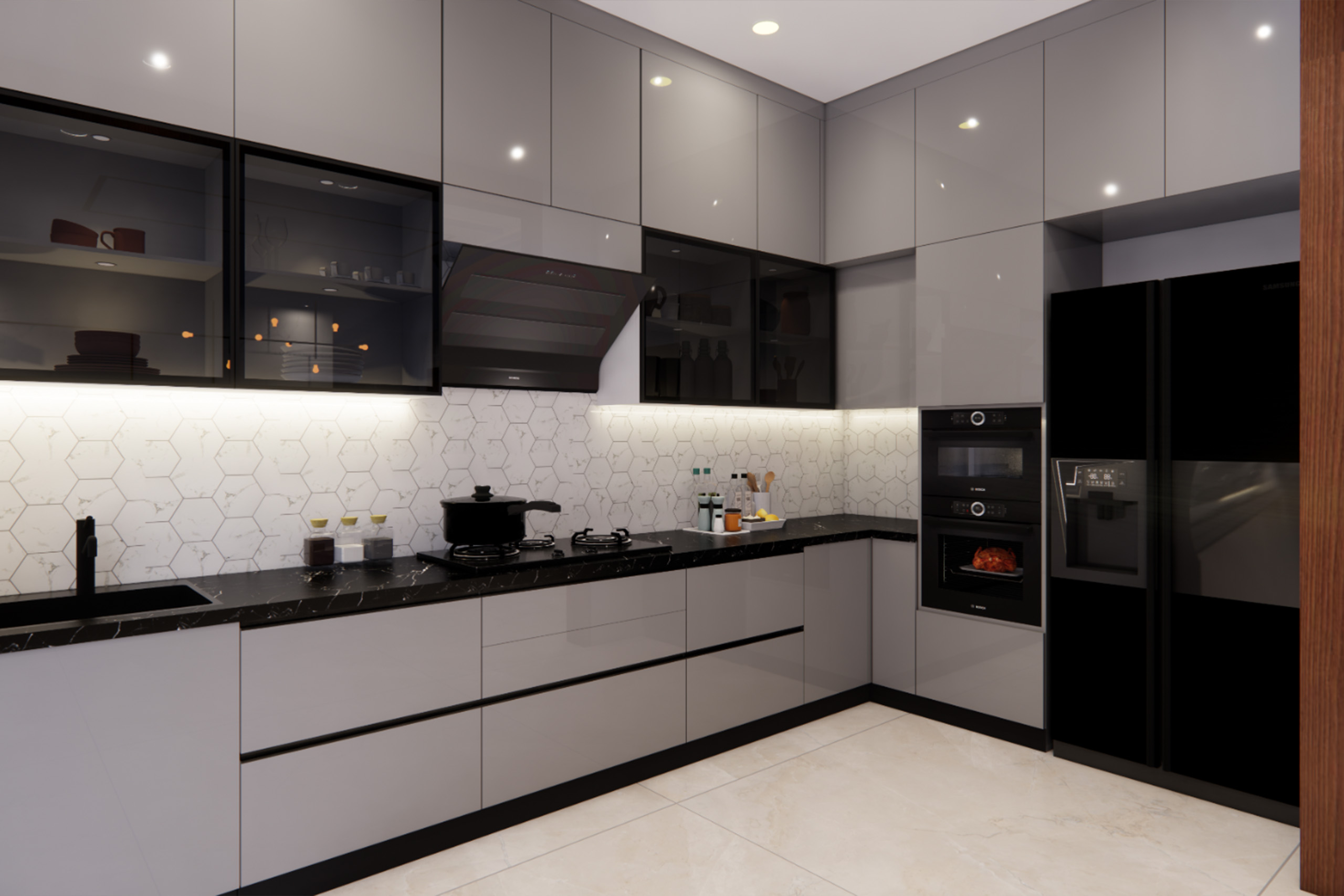
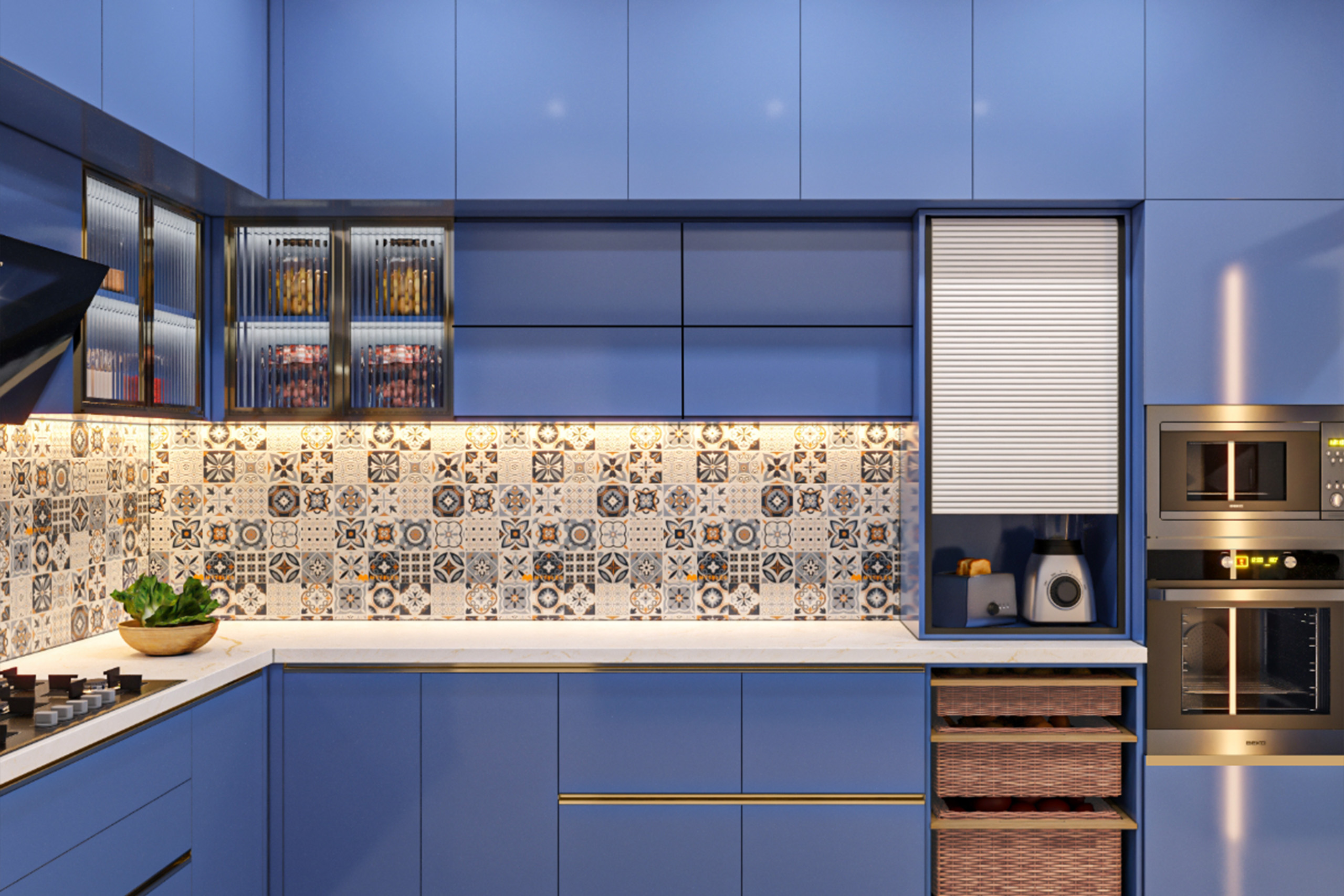
The L-shaped layout with prep area on one leg and stove on the other. This allows multiple people to work independently. The corner requires careful planning so it doesn’t become wasted space or a collision point.
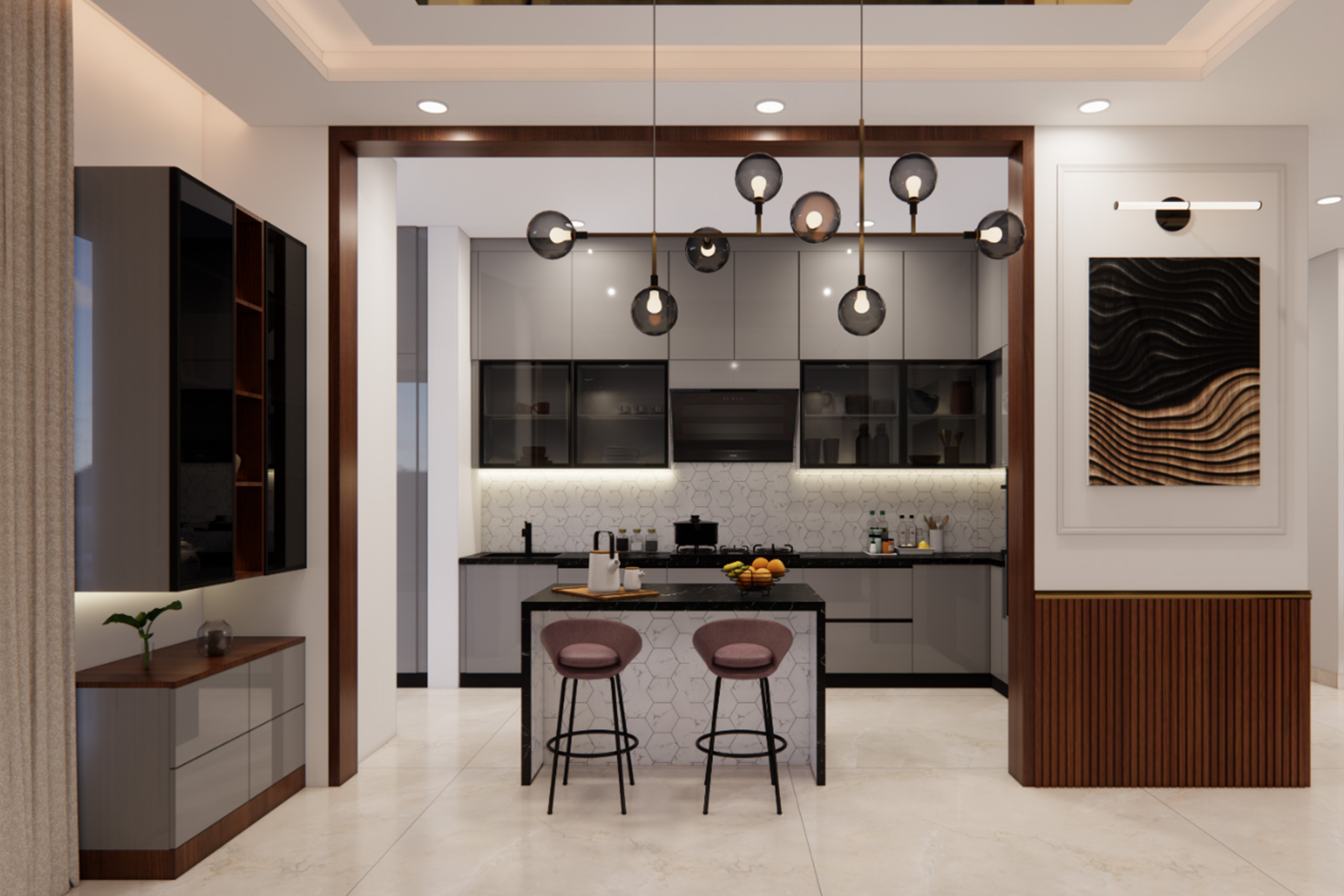
The peninsula layout with an extended counter providing additional prep space and allowing someone to work while facing the rest of the kitchen. This works well when the kitchen is larger.
Regardless of layout, we ensure the working triangle—sink, stove, storage—is organized efficiently. We minimize steps between these three key zones. We ensure multiple people can work without interfering with each other.
STORAGE SOLUTIONS FOR INDIAN KITCHENS
Storage design is where we demonstrate our understanding of Indian cooking specifically.
Spice organization is non-negotiable. We design dedicated spice storage near the stove where spices are accessed during cooking. This might be a carousel system, tiered shelving, or deep drawers with custom inserts. The system must allow quick identification and access. If you have thirty spices, finding turmeric shouldn’t require searching through the entire collection.
Dry goods storage must be accessible and protected. Flour, rice, lentils, nuts—these are stored in airtight containers on dedicated shelves. We typically design lower shelves or drawers for these items since they’re heavy. The containers should be uniform, stackable, and labeled. This might involve a dedicated pantry or substantial dedicated shelving within the kitchen.
Cooking vessel storage must be organized by frequency of use. Pressure cookers are frequently accessed. They should be stored in easy-to-reach locations. Large serving bowls or specialty equipment used less frequently can be stored higher or deeper. We organize storage so you access items without moving other items to reach them.
Oil, salt, and frequently used condiments must be immediately accessible. These are typically stored on open shelving near the stove or in a dedicated cabinet with easy access. They shouldn’t require opening multiple cabinets or moving items to access them.
Baking equipment, if used, requires separate dedicated storage. Rolling pins, baking sheets, mixing bowls—these have specific storage needs. We design dedicated drawers or shelving for baking equipment if this is part of your cooking.
Cleaning supplies are stored separately from food storage. Never combined. We typically designate a lower cabinet or under-sink storage for cleaning materials, keeping them completely separate from food and cooking equipment.
VENTILATION IN INDIAN KITCHENS
Ventilation is more critical in Indian kitchens than in most Western kitchens because of the intensity and type of cooking.
We specify powerful chimneys or downdraft systems. Not small range hoods. Substantial ventilation capacity. A chimney pulling two hundred cubic meters per hour is appropriate for an active Indian kitchen. This capacity removes cooking smoke and heat effectively.
Exhaust must be directed outside. Not recirculated into the home. Recirculated ventilation passes cooking smell and moisture back into the kitchen. Outside exhaust removes these completely. Proper ducting ensures exhaust reaches exterior vents efficiently.
The chimney position is optimized for cooking patterns. Positioned directly above the stove. High enough to not interfere with tall cooking vessels. Low enough to capture cooking vapors effectively. We consider how heat and smoke rise and position ventilation to intercept them.
We consider noise levels. Powerful ventilation can be loud. We specify systems with appropriate noise dampening or lower speeds that operate effectively without excessive noise. A kitchen should be functional, not loud.
APPLIANCES FOR INDIAN COOKING
We specify appliances based on actual cooking needs, not on trends.
Induction cooktops are now standard. They provide precise heat control, are energy efficient, and cool quickly. They work excellently for Indian cooking. We specify quality induction cooktops with adequate burner capacity. At least four burners, ideally five or six if space allows. Multiple burners allow simultaneous cooking of different components.
Microwave ovens are supplementary, not primary. Useful for reheating or quick cooking, but not central to Indian cooking patterns. We position them for accessibility but don’t design the kitchen around them.
Pressure cookers are essential equipment, not appliances. Electric pressure cookers are increasingly popular, but traditional stovetop pressure cookers remain more common in Indian homes. We ensure adequate storage for pressure cookers and counter space near the stove for them to cool after cooking.
Refrigerators should be substantial. Indian households often cook in bulk or store fresh vegetables in quantity. We specify larger refrigerators than Western kitchens might typically use. Adequate freezer space for storing prepared meals or prepared components.
Exhaust systems are critical. More critical than any other appliance. A powerful chimney is essential. We never compromise on ventilation.
Dishwashers are optional and secondary. Many Indian households still wash dishes by hand. If you use a dishwasher, we accommodate it, but it’s not central to kitchen design.
THE COMPLETE INDIAN KITCHEN EXPERIENCE
Our approach to kitchen design integrates all these considerations. We’re not designing a beautiful kitchen that photographs well. We’re designing a functional space where intense cooking happens efficiently, where materials withstand the demands placed on them, where multiple family members can work simultaneously, where everything you need is organized and accessible.
This requires understanding Indian cooking specifically. Not adapting Western kitchen design. Not prioritizing aesthetics over functionality. Not specifying appliances or materials based on trends. Designing from first principles for how Indian families actually cook.
This comprehensive approach requires substantial planning. It requires understanding your specific cooking patterns and family dynamics. It requires honest assessment of storage requirements and workflow efficiency. It requires specifying materials and appliances that will perform reliably for years under demanding conditions.
It also requires viewing the kitchen within your complete home. How it connects to your dining area. How ventilation integrates into overall home systems. How the kitchen’s functionality doesn’t compromise the design quality of adjacent spaces. How materials and finishes work together across your residence. This is why we approach kitchen design as part of entire-home design, not as an isolated project.
PORTFOLIO: COMPLETED LIVING ROOMS
READY TO DESIGN YOUR HOME?
If you’re considering a residential project and want to understand how a complete home should be designed, where your kitchen functions as part of a comprehensive whole rather than an isolated space, let’s begin a conversation.
A thoughtfully designed Indian kitchen doesn’t exist in isolation. It’s part of how your entire home functions. How it connects to your dining area and entry. How it integrates into your family’s daily life. How its design philosophy extends throughout your residence. How materials and finishes work together across all your spaces.
When you design your complete home with this integrated thinking, every room becomes better. Your kitchen becomes a space where efficient, joyful cooking happens daily.
Book a discovery meeting with our team. Share how your family cooks. Discuss your functional requirements. We’ll assess your space and present a comprehensive design approach for your complete residence, one where your kitchen is designed specifically for Indian cooking patterns and integrated as part of the whole.
Your home deserves this level of integrated thinking. Let’s create it together.
Client’s Feedback
I would like to appreciate Insyde Studio for their work which was completed 2 years ago. What stands out is their support even after 2 years of completion, they prioritize the request and complete it on time. I would like to Thank Chandru and Surendra Sir for their continued support
Anusha A P
We had a fantastic experience with Insyde Studio for our home interiors. From the start, their approach stood out—Ms. Koumudi's focus on understanding our family’s preferences set the tone for a personalized design process. The moodboard and design were thoughtfully curated, blending our ideas beautifully
Sreepradhaa Vaitheeswaran
I am glad that I found Insyde studio after a lot of research. And the end result of what they delivered was amazing. They have a very dedicated team for the whole process of interior designing to execution. The entire process was hassle-free. And the whole work was done very professionally and perfectly. Kudos to the team of Insyde Studio
Aishwarya R
I had an amazing experience at Insyde Studio! Huge thanks to Nisha for the fantastic tour. Everything was just wow! 👏 Highly recommend!"
Mahesh Gowda
Still not sure where to start?
Fill out the form to contact us